Before The Fall

All you daughters and sons

Who are sick of fancy music

We dig repetition

Repetition in the drums

And we’re never going to lose it

This is the three Rs

The three Rs:

Repetition, Repetition, Repetition

Repetition – The Fall (Baines, Friel, Bramah, Smith, Burns)

The Buzzcocks were due to be top of the bill but they didn’t turn up, so a band called The Fall played two sets. The rumour going round the camp was that the Sex Pistols would play, but that was never really on. They were banned from most venues at that point. Instead we had Repetition. Twice.
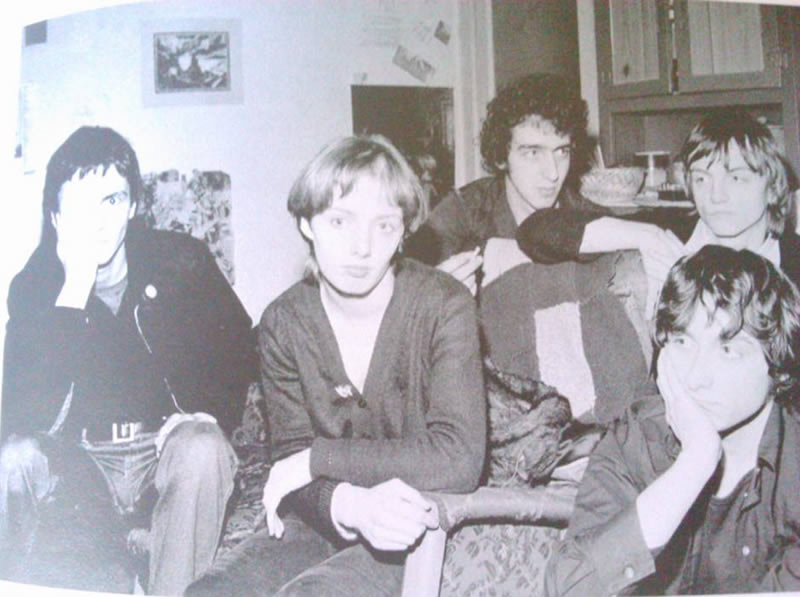
Martin Bramah, Una Baines, Karl Burns, Mark E Smith and Tony Friel, 1977

Quite how I ended up on the Right to Work March from Liverpool to Blackpool in September 1977 I’m not sure. I wasn’t actually unemployed; I was between jobs, having just finished a temporary post as a landscape gardener and waiting to start another short contract as a survey assistant for the local council. That’s how it was for new graduates in 1977; ‘career’ jobs were hard to come by.

Career opportunities, the ones that never knock

Career Opportunities – The Clash (Strummer, Jones)

Neither was I a member of the Socialist Workers’ Party, of whom the Right to Work Campaign was a front organisation. But several of my Chester friends were involved in organising the event and the prospect of walking to Blackpool to lobby the TUC for more action on unemployment sounded more interesting than another weekend in sleepy Chester, so I agreed to go along.
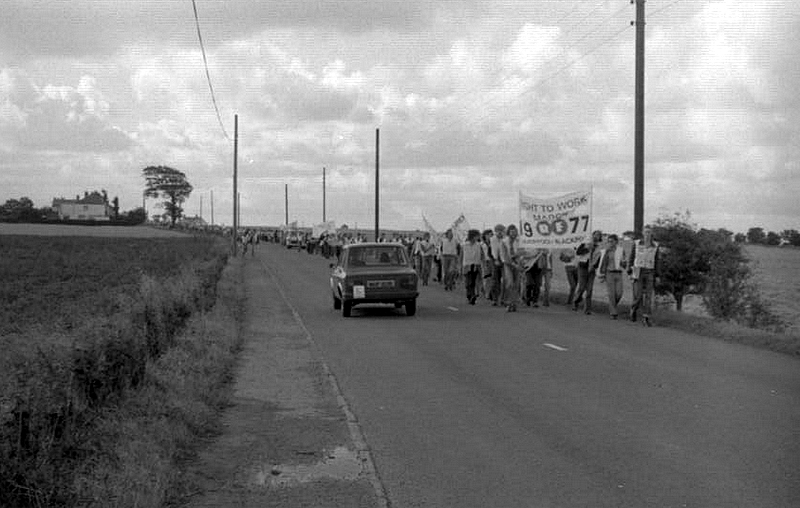
Right to Work March, September 1977

As it turned out I didn’t do an awful lot of walking that weekend. My friends Bobby K and Harry could both drive so the three of us were put in charge of driving one of several vans from one overnight stopover to the next: night one in Kirkby, night two in Wigan and the third night in Preston. We carried one of several large marquee tents in the van, as well as the odd injured or footsore marcher, driving from one campsite to the next. Once at that night’s campsite we rounded up anyone available to help erect the tent.

That first night we camped on a sports ground in the middle of a council estate in Kirkby, a Liverpool new town: overspilled and underfunded. The night’s entertainment had been arranged at the nearby Kirkby Suite, a Top Rank-style nightclub. I’d been into punk rock since the previous year and went with a group of friends hoping to see The Buzzcocks. Or maybe it would be the Pistols. Either way I’d never heard of The Fall.
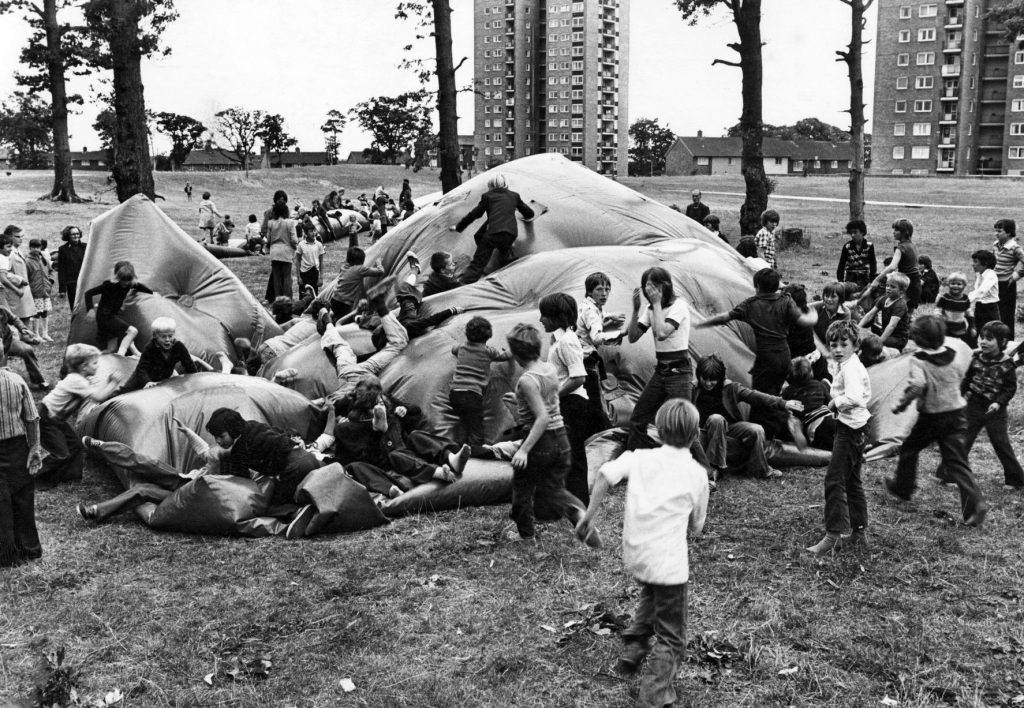
Play scheme at Kirkby, 1977

The opening act was Ed Banger and the Nosebleeds – I knew the name but had never heard any of their music. Frankly, they weren’t very good, although I thought the guitarist was OK. Many years later I found out that he was Vini Reilly, who left the Nosebleeds and formed the much better-known Durutti Column in 1978. He (and Ed Banger, who also quit) were replaced by a pre-Smiths Morrissey and Billy Duffy, of The Cult fame.
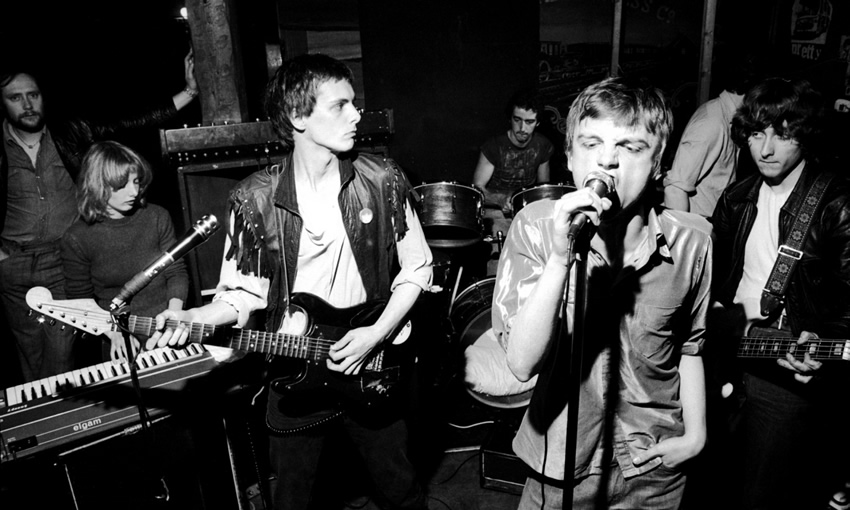
The Fall performing in 1977

The Fall didn’t look like a punk band, in fact they didn’t look like any kind of a band. Their image was completely anti-fashion and their general vibe was definitely not rock and roll. The musicians ambled onto the stage, played their set with no attempt to engage with the audience and then slunk off again. Then they did the same thing again for the second set.

The exception was the singer, whom I later found out was called Mark E Smith. He had a definite stage presence and seemed to create a sense of danger just by his body language. Smith wore a brown satin shirt and dark trousers over his slim, tall frame. It was obviously his gig shirt in those days, as I’ve seen it in pictures of other performances from 1977 and 1978. His mood seemed to be poised between amusement and aggression. The sound was poor and I couldn’t discern most of the lyrics. But that didn’t matter, what struck me that night and the thing that has stayed with me for over 40 years as a Fall fan, was that Smith sang the words of his songs like he really meant them. And the man’s lyrics, his poetics, are still something completely unique in rock music:

None
No recipes
It was like a see-saw
No
It was like an up and down
Bye bye
Mother, Sister
Mother, Sister
Why did you put your head in?

Mother-Sister! – The Fall (Smith, Baines)

‘Why does the singer add that sound at the end of every line?’ Mike commented between the two sets. ‘You know what I mean? It’s like: “I was walking down the street-ah”. It’s like a working men’s club singer thing.’

I didn’t know the answer then and I still don’t know it now. But I do know that many of The Fall’s early gigs were in working men’s clubs and that Smith’s lyrics and his vocal delivery were the one consistent factor in a Fall canon of 31 studio albums and a revolving door of more than 50 Fall musicians.

I don’t have a set list for that night in Kirkby, though most of the material would have been early versions of the songs later released on The Fall’s first album, Live at the Witch Trials. From reviews of other gigs during this period, as recorded on the excellent thefall.org website, it is likely that the set that would have comprised something like:

Psycho Mafia / Last Orders / Repetition / Dresden Dolls / Hey Fascist / Frightened / Industrial Estate / Stepping Out / Bingo Master’s Breakout / Oh! Brother / Cop It / Futures and Pasts / Louie Louie

The only song I really remember from my first Fall gig is Repetition, probably because they played it twice. Naturally.

The audience at Kirkby were mainly teenage punks who had been looking forward to seeing the Buzzcocks, or maybe even the Sex Pistols if they believed the wilder rumours. Instead they got a double helping of The Fall. Although The Fall operated within a punk ethic, they were never a punk band in terms of the music, so the audience were left both bemused and confused. Mike certainly didn’t like them-ah. But another friend, Richie, declared himself a fan that evening, as did I. Richie was one of the SWP Jesuits, but was a lovely guy. I lost touch with him soon after but I like to think he had a long and fruitful relationship with the band and their music.

The Fall at Buckley Tivoli, November 2015


I’ve been a Fall fan since that night and saw them many times, the last being in Buckley in November 2015. Mark E Smith died in January 2018 and with him the life of the band ended too. But we are left with all that music, and all those lyrics.

We dig it, we dig it,
We dig it, we dig it
Repetition, repetition, repetition
There is no hesitation.

Credits

The Fall publicity shot, 1977 – Kevin McMahon

Right to Work March, 1977 – Joe Neary

Kirkby, 1977 – Neil Macdonald

The Fall performing, 1977 – Kevin Cummins

The Fall at Buckley Tivoli, 2015 – Brent Jones Photography
Posted in Home | Tagged , , , , , , , | 6 Comments

May Sinclair at Gresford

Either the operation or the pain, going on and on, stabbing with sharper and sharper knives; cutting in deeper; all their care, the antiseptics, the restoratives, dragging it out, giving it more time to torture her.

May Sinclair – Life and Death of Harriett Frean

Mary Amelia St. Clair Sinclair, known as May Sinclair, was born in Rock Ferry, Wirral in 1863. Her family lived in a house called Thorncote in the prosperous Rock Park suburb and she spent the first seven years of her life at this address. May Sinclair was a feminist, a successful author and a key figure in the early modernist movement. There has been something of a resurgence of interest in her work in the last few years but she is perhaps still best known for coining the phrase ‘stream of consciousness writing’ when reviewing the work of her friend, Dorothy Richardson.

The Sinclair family lived in a large house with an extensive garden and were attended by a number of servants. Due to a series of unwise investments, May Sinclair’s father, William, lost most of his money and the family were forced to leave Rock Park. May was just seven-years old at the time.

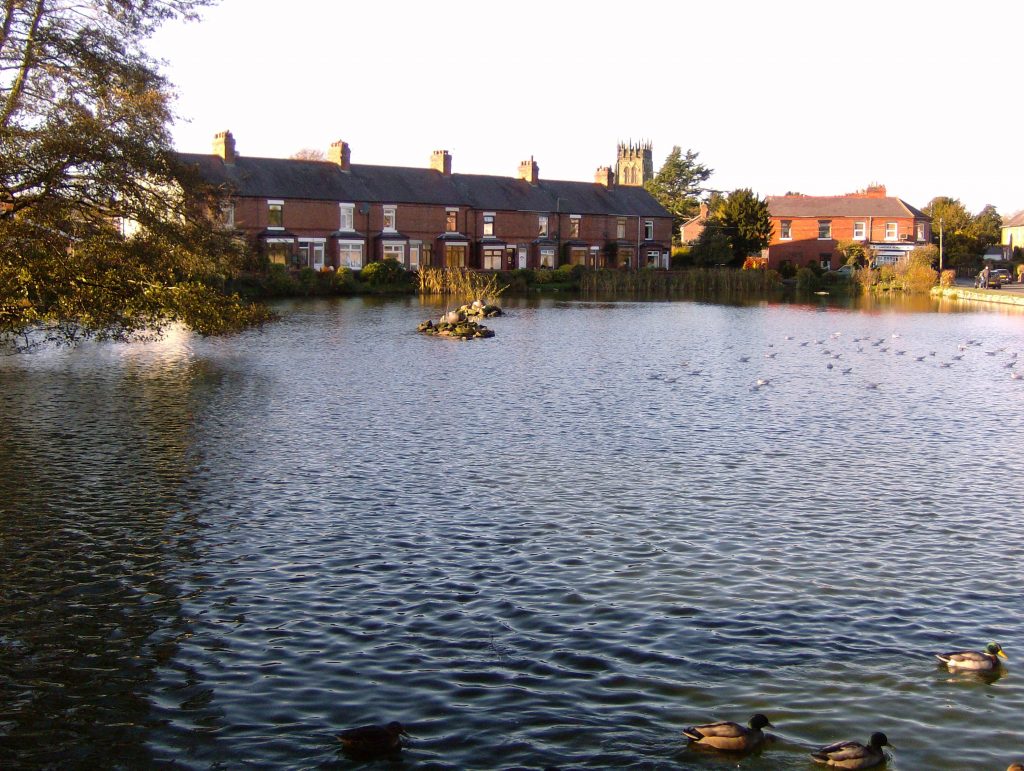
Gresford Pond

Gresford Village Lake from High Street


For the next eleven years, until William’s alcohol-related death, the family led a nomadic life before settling in the village of Gresford, near Wrexham. The village is just three miles from my home: a pleasant walk across the fields, sometimes taking in one of my favourite pubs on the way. Gresford is infamous for the colliery disaster of 1934 in which 266 men and boys died as a result of lax safety procedures. The heart of the village, however, is much older than the nineteenth-century expansion which came with the discovery of coal and is listed in the Domesday book as ‘Gretford’ (Old English græs and ford ‘grassy ford’). A number of Roman artefacts have been unearthed around the village suggesting a possible Roman settlement from nearby Deva (Chester).

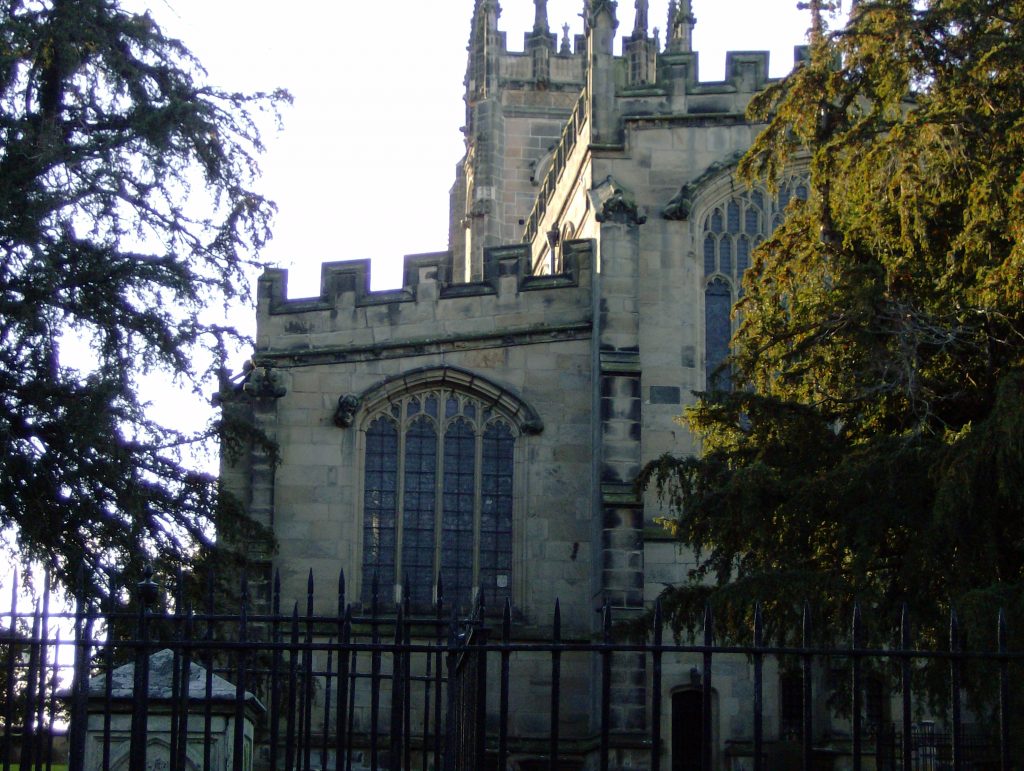
All Saints Gresford

All Saints Church

We know very little about May Sinclair’s everyday life during the eight years or so she lived in Gresford. But what we do know is that this was a period when May’s career as a writer began to take off, but it was also a time marked by several family tragedies. It is likely too that the family attended services at All Saints parish church in the centre of the village as it is recorded from their time in Rock Park that they were Anglicans and regular churchgoers and that May’s mother, Amelia, was particularly devout. Her faith, however, was inflexible and austere. May later wrote that the atmosphere her mother created in the family home was one of ‘cold, bitter, narrow tyranny’.

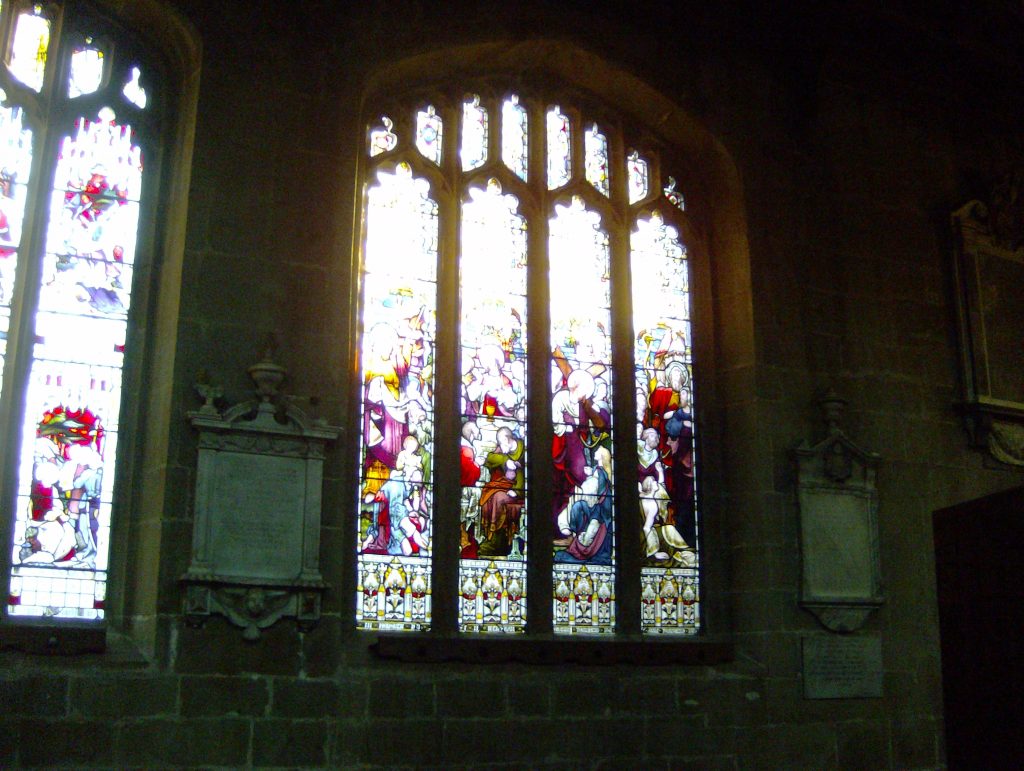
All Saints

Interior of Church

While in Gresford May continued her private studies of philosophy and began, tentatively at first, to write poetry. In 1886, when she was aged 23, May Sinclair’s first collection of poems, Nakiketas and Other Poems, was published. To be taken seriously by the male literary establishment, she published the collection under the pseudonym ‘Julian Sinclair’. The longest poem, Helen, focuses on a loveless marriage and Helen’s determination, in a society where she had no other options, to rise above the casual cruelty of her husband, Emile:

                              for I know
That love is not the whole of a woman’s life,
Nor yet of man’s, but there are higher things-
Devotion-honour-faith-self-sacrifice.

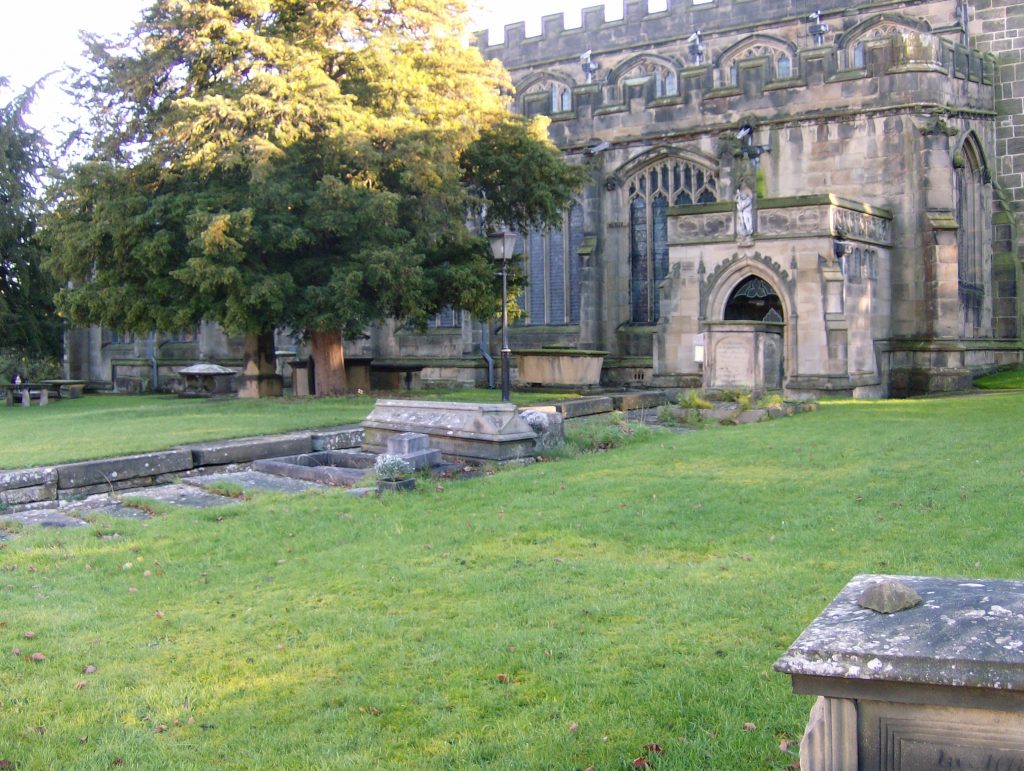
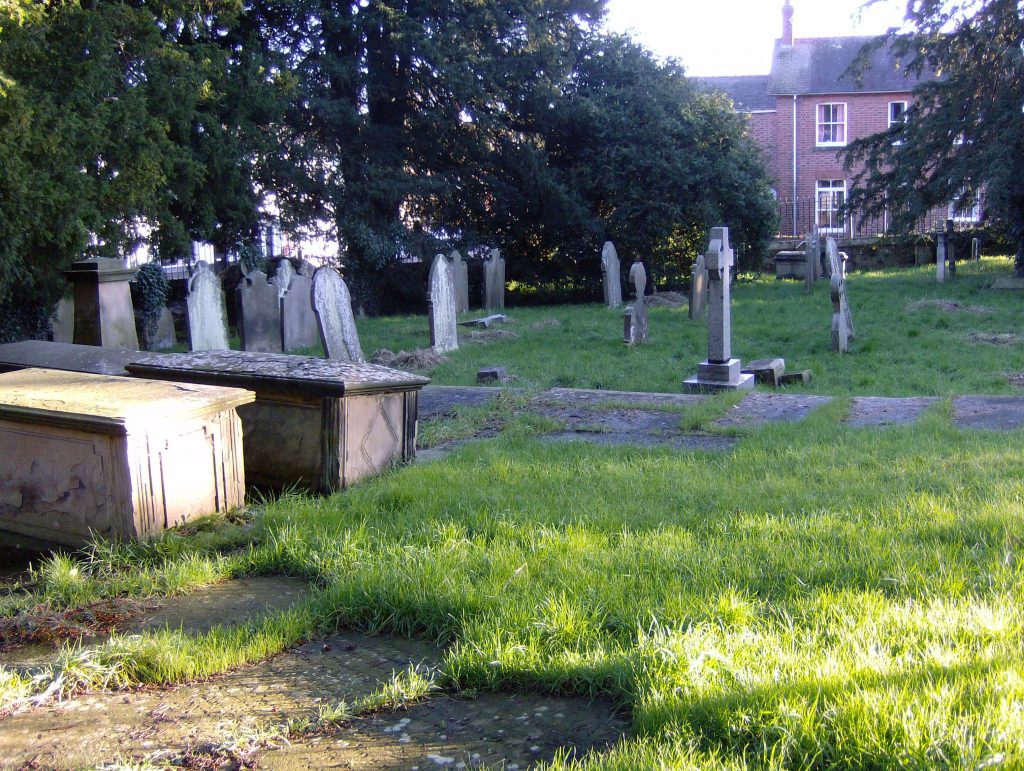
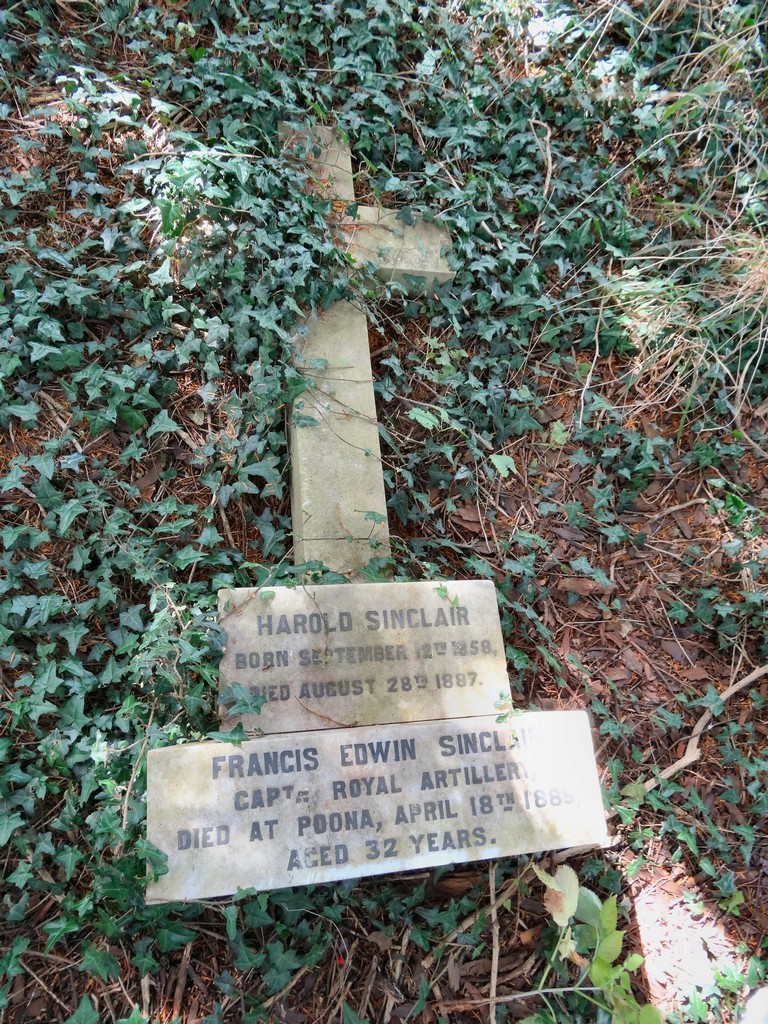
Nakiketas and Other Poems is a sombre and serious work and foreshadows the tragedies which befell May and her family during their remaining years in Gresford. In 1887 her brother Harold died at the age of just 29. Then, in 1889, one of her remaining three brothers, Frank, died while serving with the Royal Artillery. I manged to locate his probate record (not settled until 1901) which shows that he left effects to the value of £100 to May. Both brothers suffered with a congenital heart defect and are buried together in the churchyard of All Saints Gresford.

Churchyard

Churchyard

Churchyard

Churchyard

Sinclair Grave

Sinclair Grave


In 1890 May Sinclair, her mother and her brother Reginald left Gresford for the final time. I have not been to locate the address in Gresford where May and her family lived. Tantalisingly, they arrived just after the 1881 census and left ahead of that which took place in 1891. May Sinclair’s time in Gresford is marked by a single volume of poetry and the memorial stone to two of her brothers.


I am indebted to Suzanne Raitt and her excellent biography ‘May Sinclair: A Modern Victorian’ for much of the biographical detail used in this article
I also recommend the website of the May Sinclair Society for further information, research and discussion on May Sinclair and her work

Image of Harold Sinclair monument (grave 377409) courtesy of the Gravestone Photographic Resource (GPR)

All other images ©Bobby Seal


Posted in Home | Tagged , , , | 2 Comments

The Two Moors Way: Part 4

All the beauty of the spring went for happy men to think of all the increase of the year was for other eyes to mark. Not a sign of any sunrise for me from my fount of life; not a breath to stir the dead leaves fallen on my heart’s Spring.”
R.D. BlackmoreLorna Doone

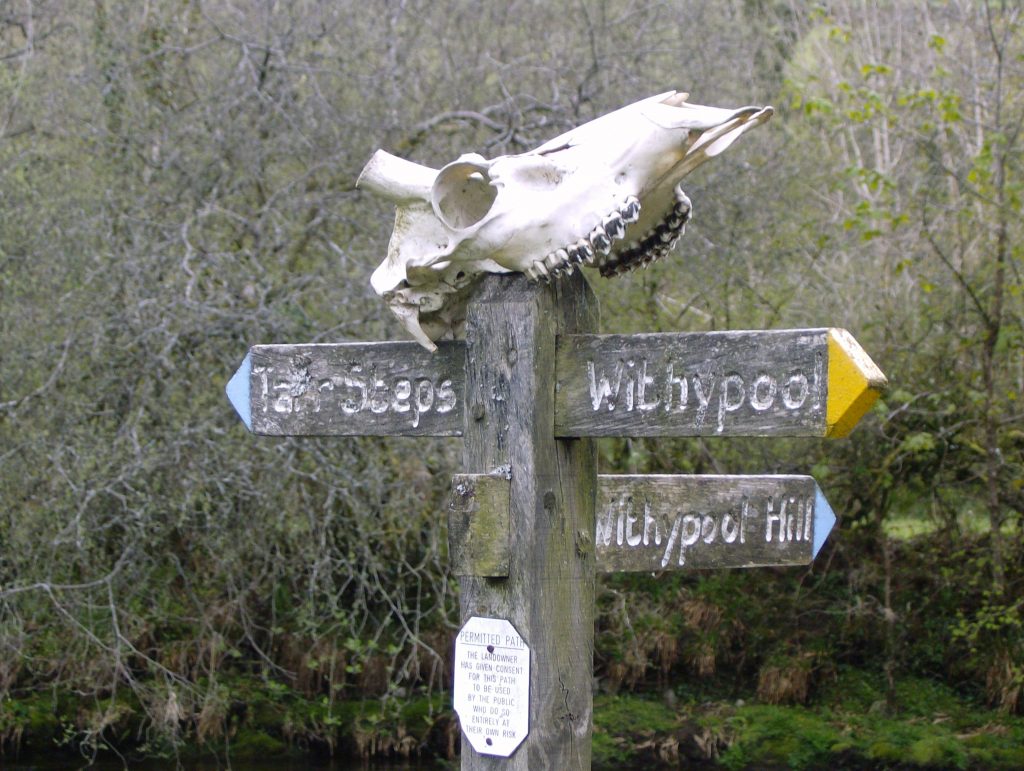
Today is the final day of our walk and takes us for nearly twenty miles over Exmoor and down to the coast at Lynmouth. From Hawkridge we cross the Tarr Steps, an ancient clapper bridge across the River Barle, and then follow the Barle valley northwards to Withypool.

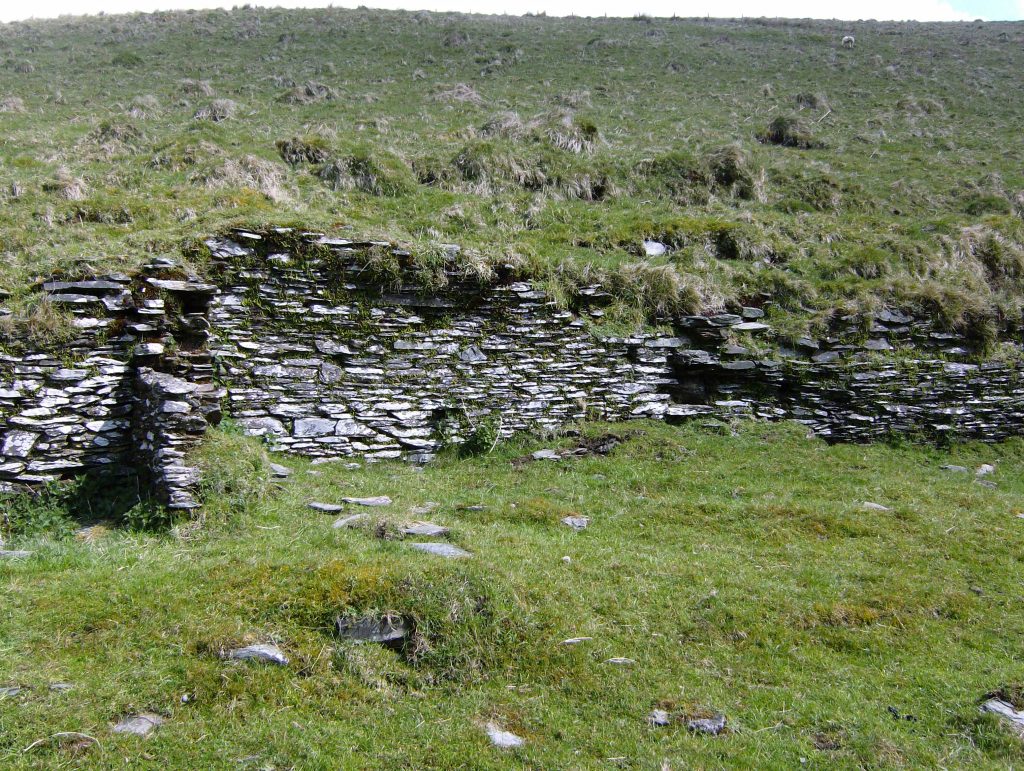
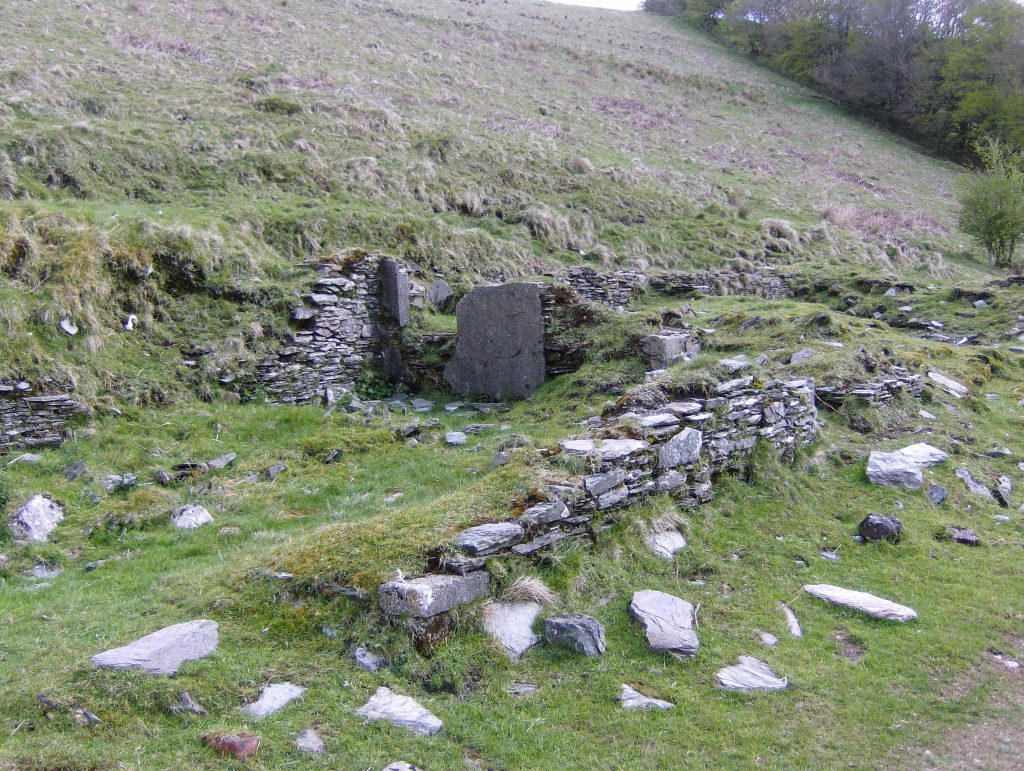
From here we continue to follow the river and its pleasant wooded valley. The track then gradually climbs up onto the open moorland taking past the old mine workings at Wheal Eliza.

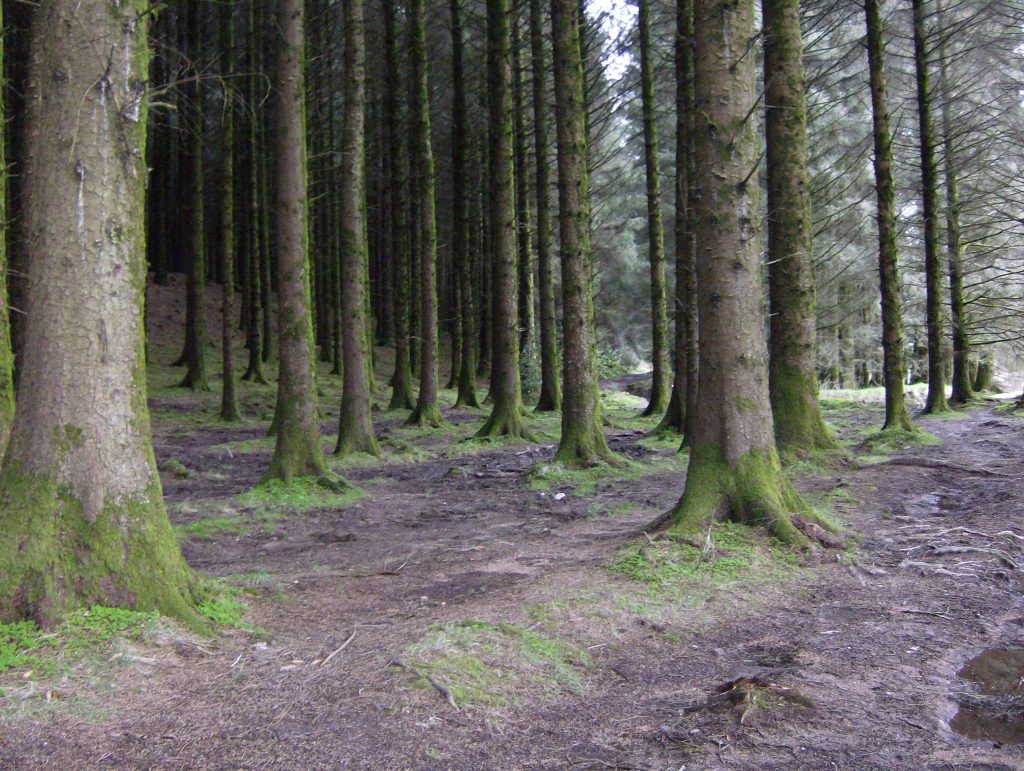
We dip down into the valley and through the village of Simonsbath, through a conifer forest and up onto the open moorland again.

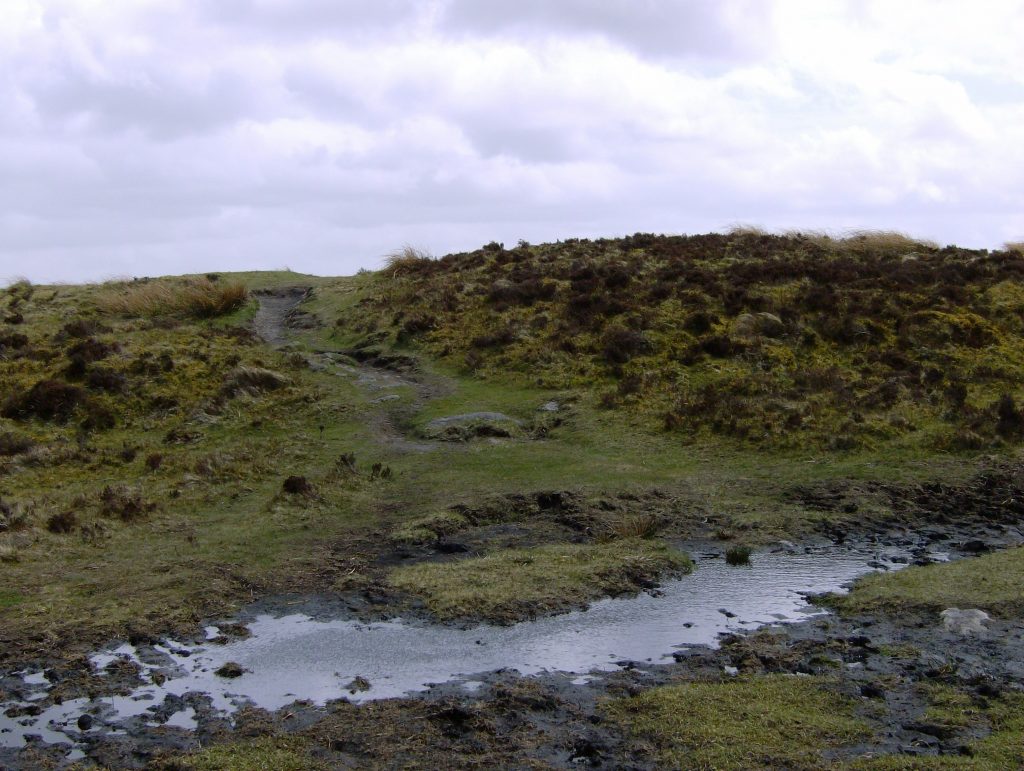
At Exe Head we stop to look for the source of the River Exe. The best we can find is a patch of waterlogged turf; but even great rivers have to start somewhere. The sun is high in the sky by the time we climb up onto the Cheriton Ridge; our final major ascent before we gradually descend towards the coast.

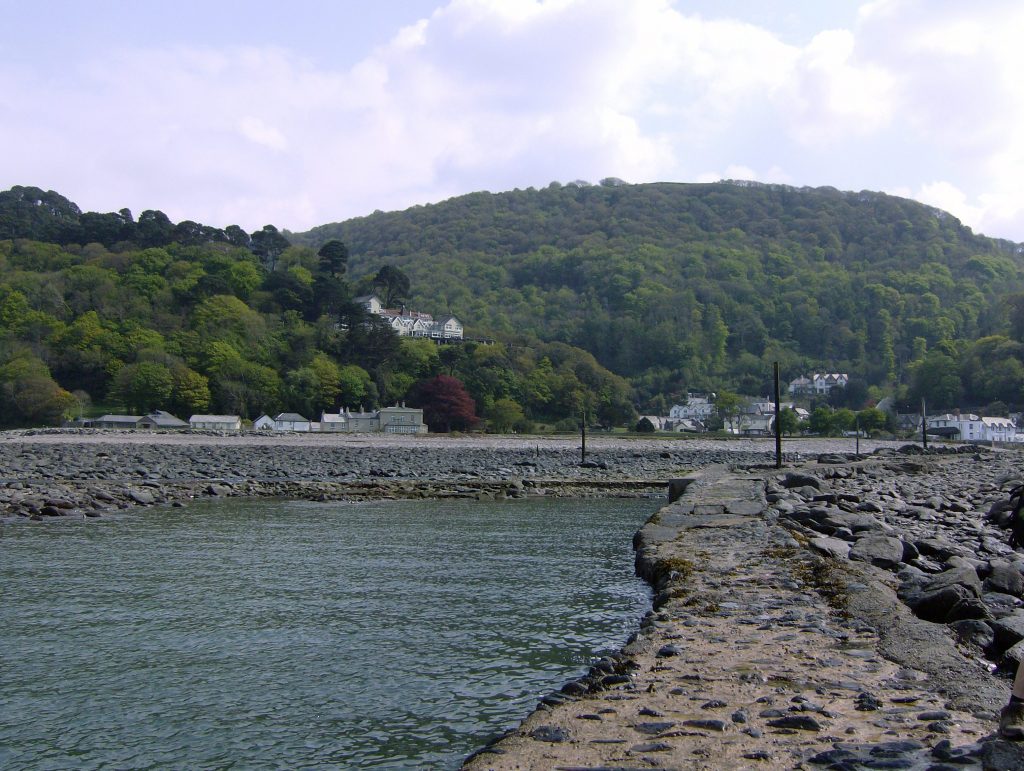
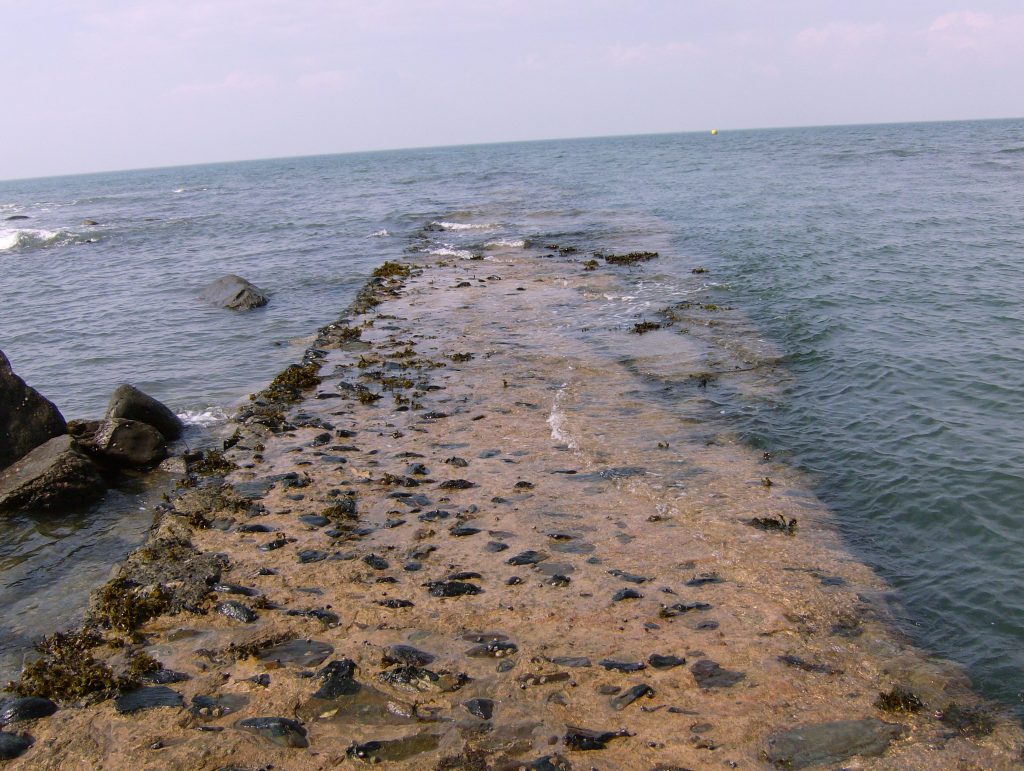
We pass the National Trust property at Combe Park and then take a green lane which follows the valley down towards Lynmouth. At this point two of the riveted lacing eyelets on my right boot decide to part company with the rest of the upper. But no matter, I can see the sea and it’s all downhill now. Having travelled across two moors, from the English Channel to the Bristol Channel, we complete our 117-mile walk by dipping our toes into the sea at the end of the breakwater on Lynmouth beach, before going off in search of a celebratory pint.


All pictures ©Bobby Seal


Posted in Home | Tagged , , , | 2 Comments

The Two Moors Way: Part 3

Continuing our 117-mile walk across Devon, coast to coast, in 2013. Part 1 can be found here and part 2 here.

In Medieval times Chagford was a Stannary town, one of four in Devon where locally mined tin could be brought to be weighed and assayed. Later it became a centre for the wool trade. With its narrow streets and buildings dating back to the 15th century it makes a pleasant place to rest for the night.

The next morning we cross the River Teign and head north towards Drewsteignton.

Along the way we pass Castle Drogo, a granite revivalist castle built in the early 20th century. It was designed by Edwin Lutyens and incorporated Medieval and Tudor styles. It was subject to extensive renovation when we were there.

We cross the busy A30 dual carriageway after Drewsteignton and leave the Dartmoor National Park. The route to Morchard Bishop and our next overnight stop takes us through rolling agricultural land and along lanes and footpaths.

We are up early the next morning as we have a 22-mile trudge up to Hawkridge and Exmoor. We walk through wooded valleys with streams that flow westward towards the catchment basin of the River Taw and so-called Tarka Country.

All day the wind shook the rusty reed-daggers at the sky, and the mace-heads were never still.

Henry Williamson – Tarka the Otter

Once out of the valleys and onto higher ground we catch glimpses of Exmoor on the horizon ahead and Dartmoor at our backs. As the afternoon begins to cool and rain clouds move in from the west we reach Hawkridge at last,

All pictures ©Bobby Seal

Posted in Home | Tagged , , , , | Leave a comment

The Two Moors Way: Part 2

Continuing the story of our 117-mile walk across Devon, coast to coast, in 2013. Part 1 can be found here.

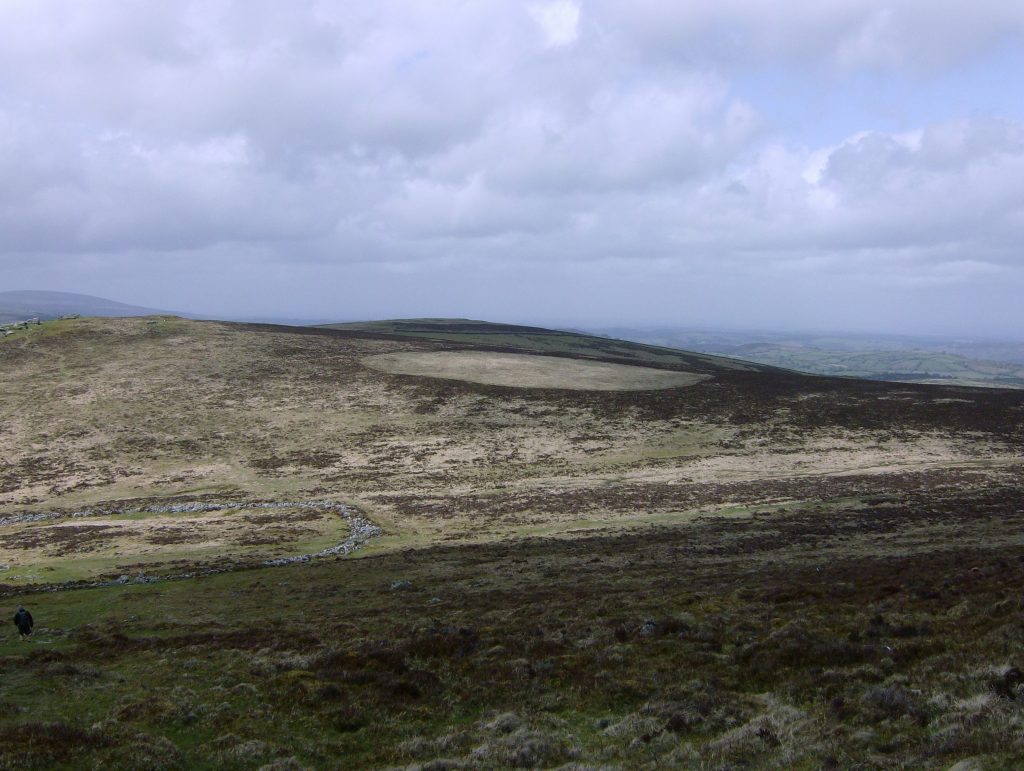
From our stopping place just north of the River Dart we set out across the moor towards Grimspound and Chagford. Today’s route takes us over the hilly northern section of Dartmoor and is probably our toughest day’s walking. But before that we walk gradually uphill through the morning-fresh wooded valley of the Dart.

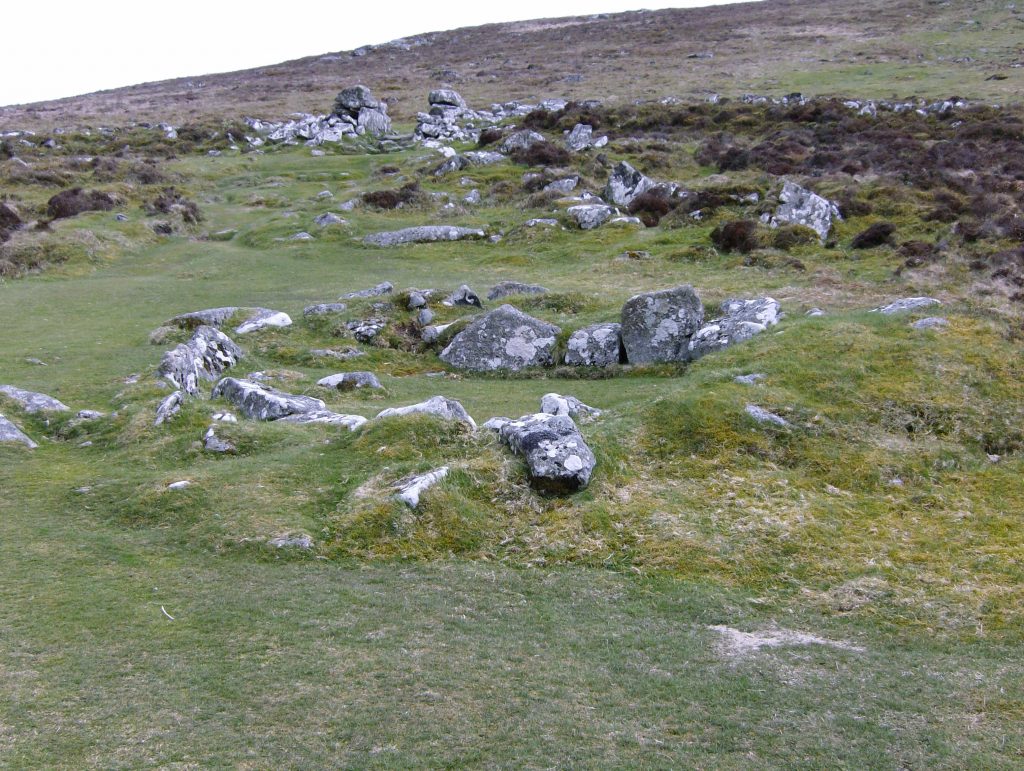
The moor is high and empty, but it hasn’t always been so. For our prehistoric ancestors these uplands were safer and more comfortable places to live than the densely forested valleys. Evidence of earlier occupation is all around, as Conan Doyle, author of The Hound of the Baskervilles, which he set on these moors, noted in the Victorian era:

The whole steep slope was covered with grey circular rings of stone, a score of them at least.
“What are they? Sheep-pens?”
“No, they are the homes of our worthy ancestors. Prehistoric man lived thickly on the moor, and as no one in particular has lived there since, we find all his little arrangements exactly as he left them…”
Arthur Conan Doyle – The Hound of the Baskervilles

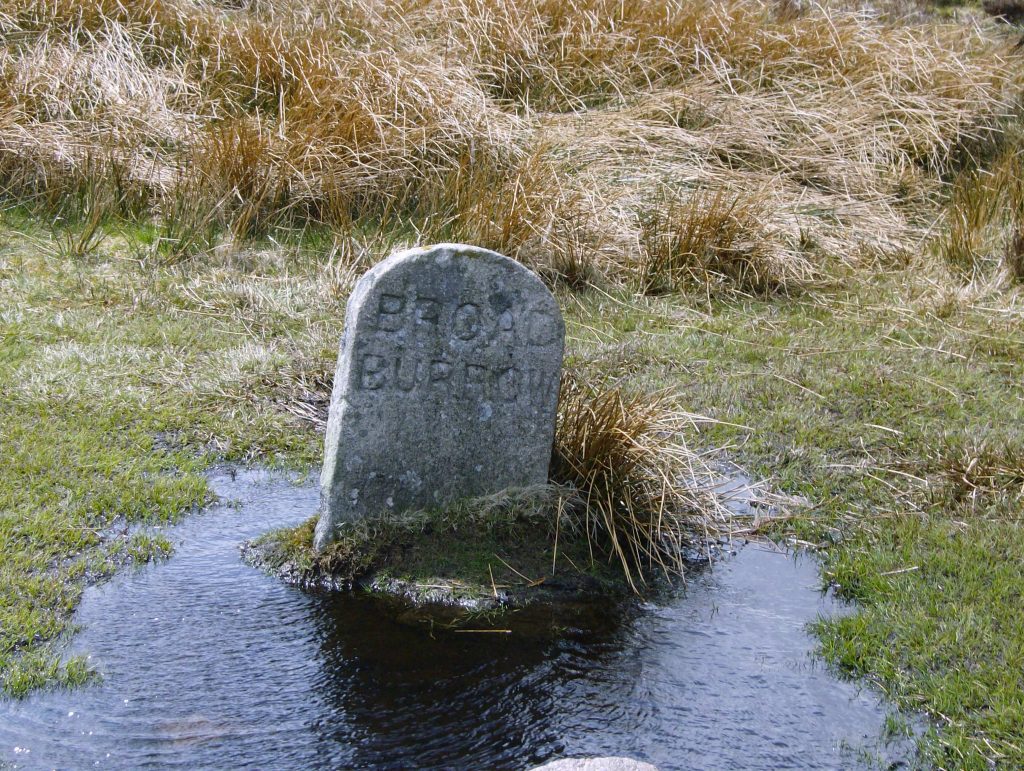
At the highest point on Hamel Down (532m) is Broad Barrow, a huge prehistoric burial site, the largest on Dartmoor. The Two Moors path runs directly through it.

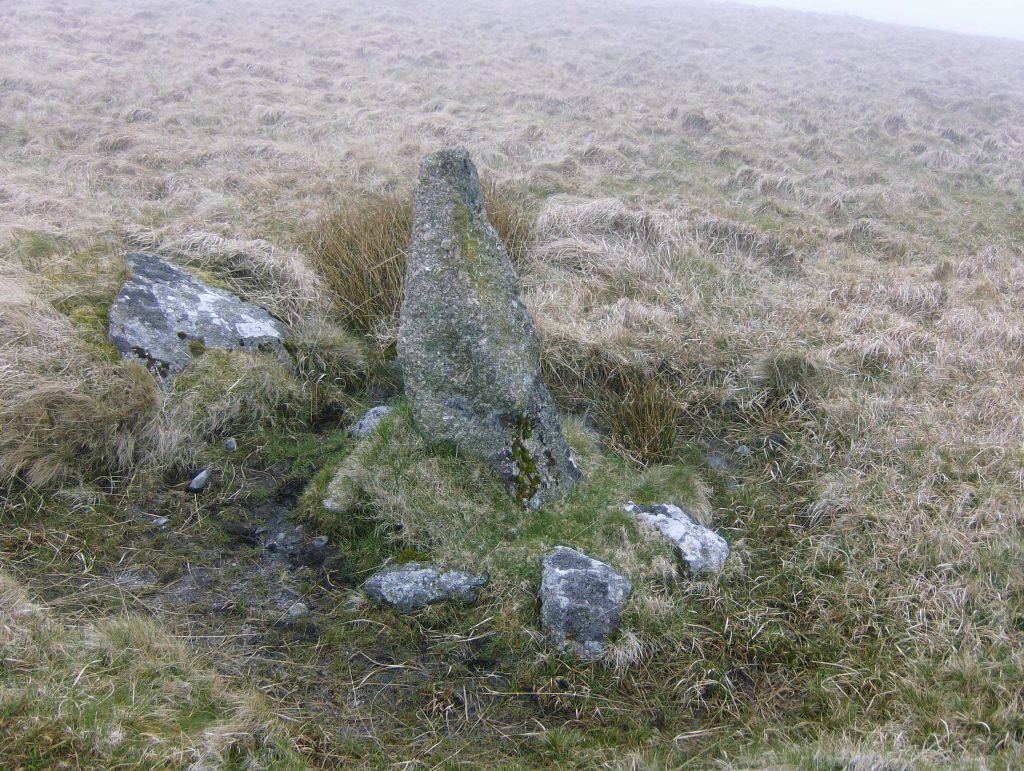
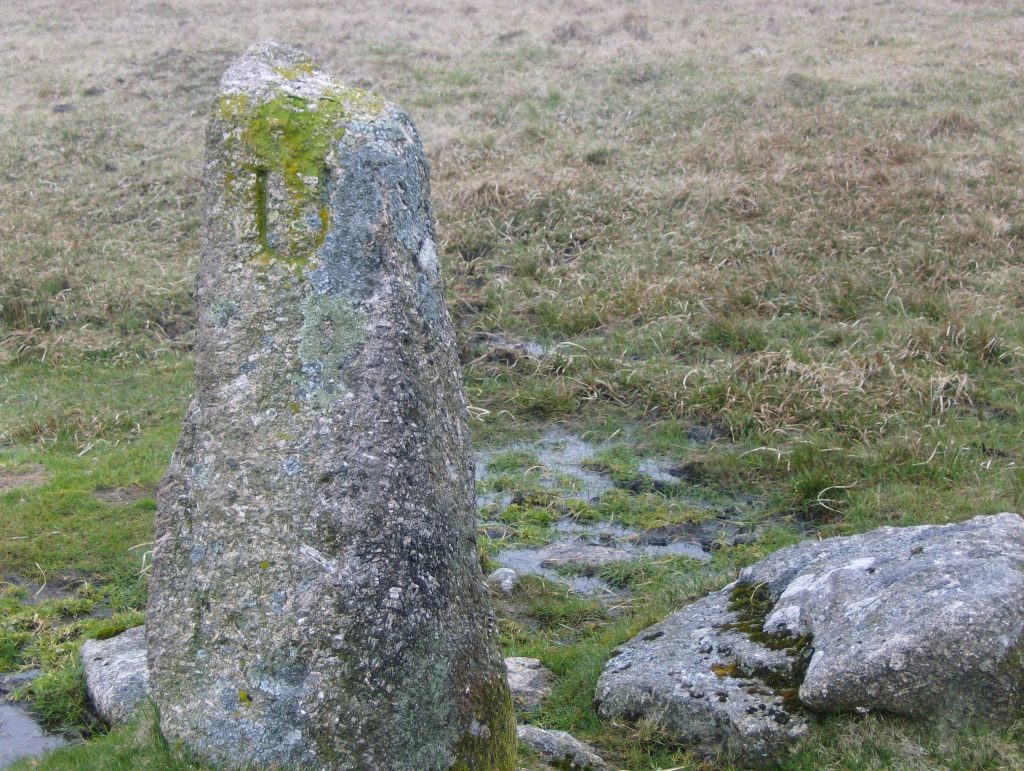
Nineteenth Century Marker Stone on the Barrow

Hamel Down

A mile further on is Grimspound. I have written about Grimspound on this blog before, so I have reused some of that material for this account.

We approach Grimspound from the south-east over Hameldown Tor and Broad Barrow. As we do so I have in mind Julian Cope’s description from his wondrous The Modern Antiquarian (1998):

Imagine ancient travellers arriving at Grimspound, but coming downhill from over the moor to the east, the great citadel on Hookney Tor high above to the north, dotted with look-outs and linked by the causeway. Imagine the women at the water – the fast-flowing stream at the northern edge of the huge circle. The water runs right through the settlement. And mighty it is too.

Approaching Grimspound from the South-East


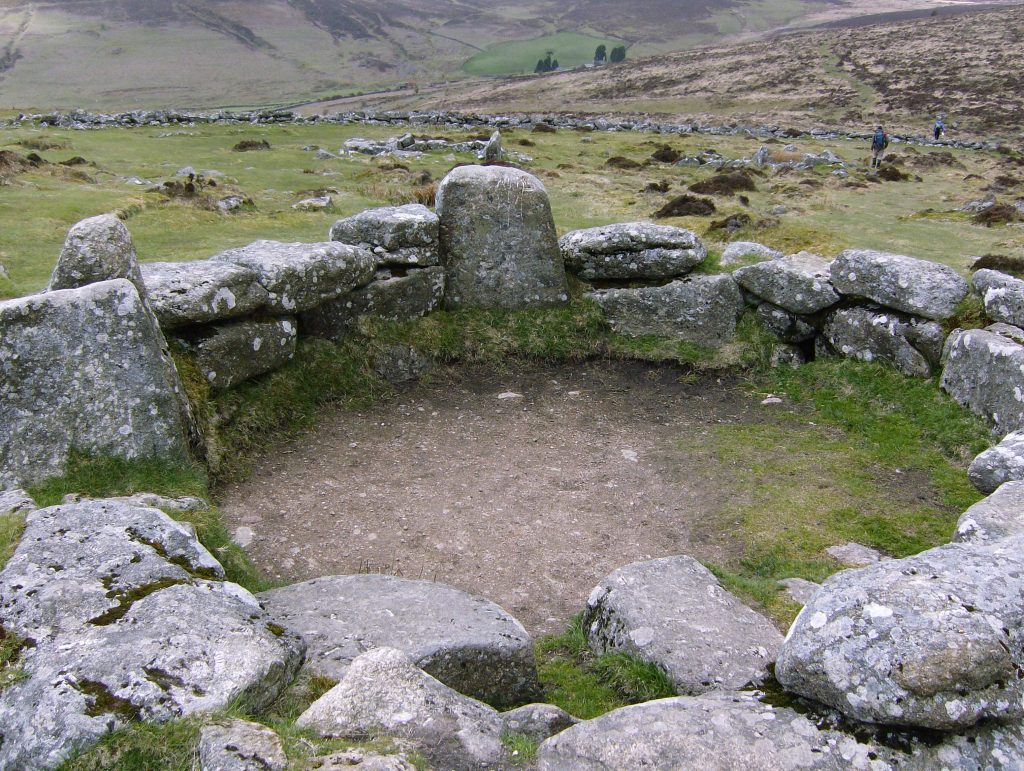
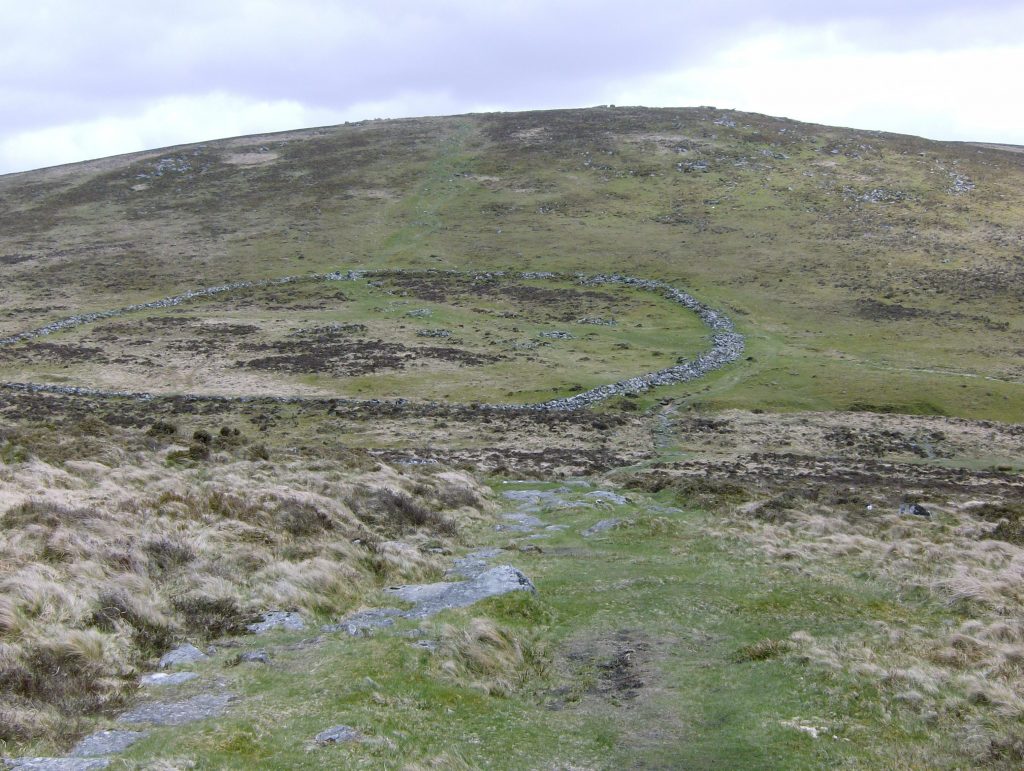
Grimspound does not disappoint – it is only the weather that is grim this day, battering us with driving rain as we come down off the Tor to continue on towards Chagford. The four-acre site comprises a circular defensive enclosure containing the remains of twenty-four hut circles, all originating from the Late Bronze Age. The site is dominated by the heights of Hookney Tor to the north.

Hut Circle

Hut Circles Showing Entrance to the Enclosure

From Hookney Tor

The name Grimspound, of course, is a relatively modern invention, with ‘grim’ meaning deadly or savage and ‘pound’ an enclosure. But there is ample evidence that this was not such a grim place in Bronze Age times, with the climate of southern Britain being much more temperate and the four-foot walls of the enclosure being more suited to herding animals than necessary for defensive purposes. Nonetheless, on our visit nature succeeds in evoking a powerful sense of a landscape steeped in desolation and hardship.

We come down off the moor, cross the B3212 Exeter to Postbridge road and meander our way through the lanes for another four miles or so to the village of Chagford.

All pictures ©Bobby Seal

Posted in Home | Tagged , , , , | 3 Comments

The Two Moors Way: Part 1

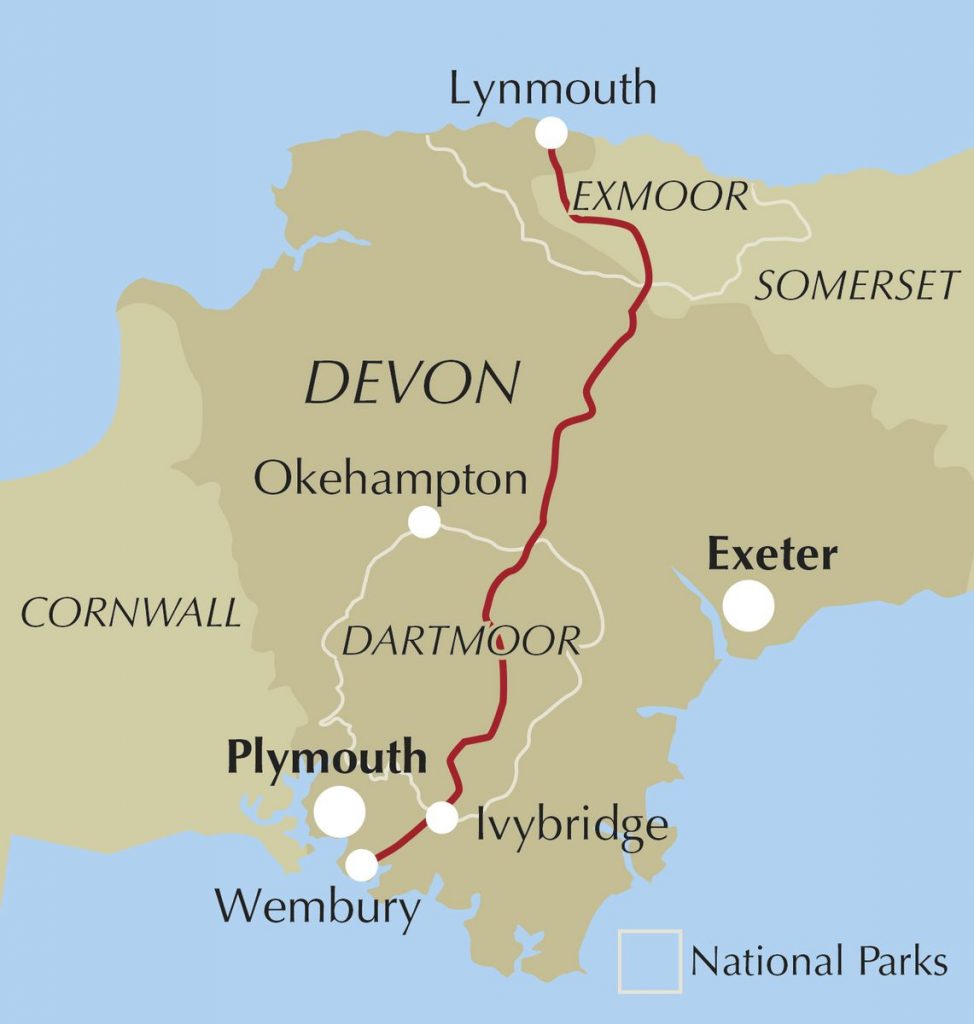
In May 2013 I took a walk with three friends travelling from Wembury on Devon’s south coast to Lynmouth in the north. Our route took us across Dartmoor and Exmoor on a 117 mile long-distance path known as the Two Moors Way. Because of the restrictions caused by the current pandemic, a journey such as this is impossible at the moment. So, with my memory prompted by a set of old photographs, I’m making that journey again in my imagination and sharing our progress here.

Two Moors Way Map


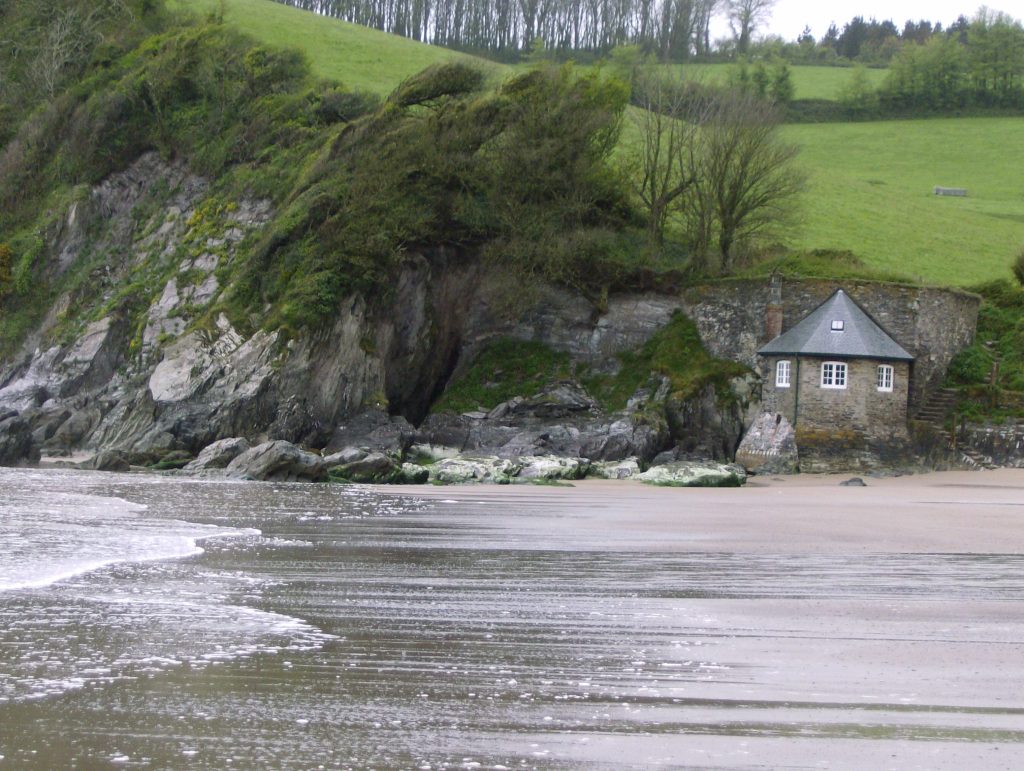
Rich, Bruce, Clive and I stayed at Clive’s mother’s house in Exeter on the Friday evening and then drove down to Wembury, near Plymouth, to start our walk early on the Saturday morning. We walked down the beach and immersed our toes in the water before we set out: if you’re going to do this coast-to-coast thing, do it properly!

Wembury


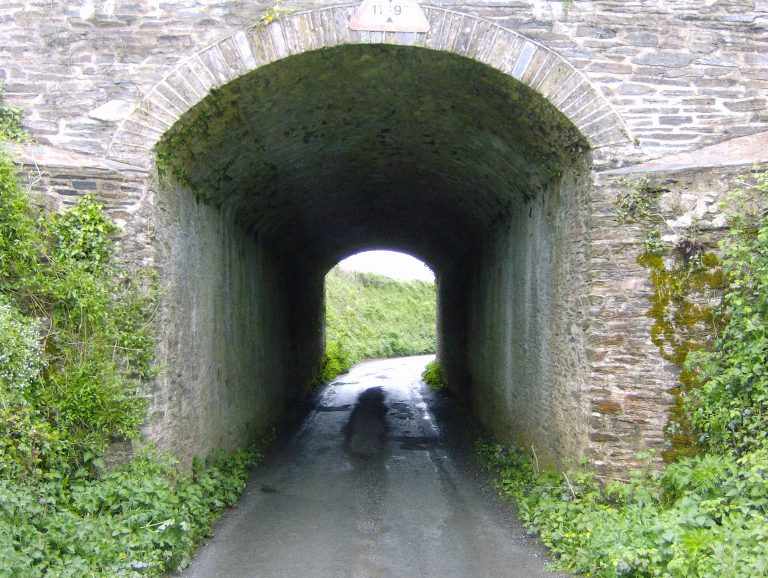
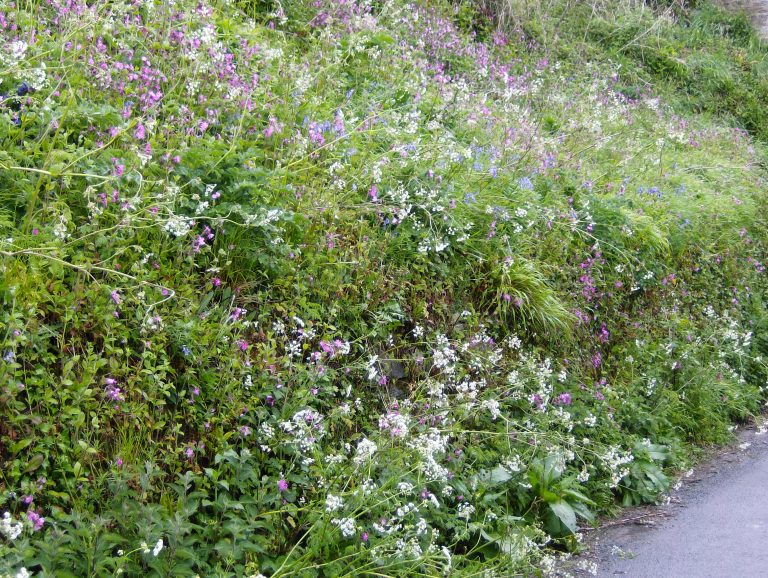
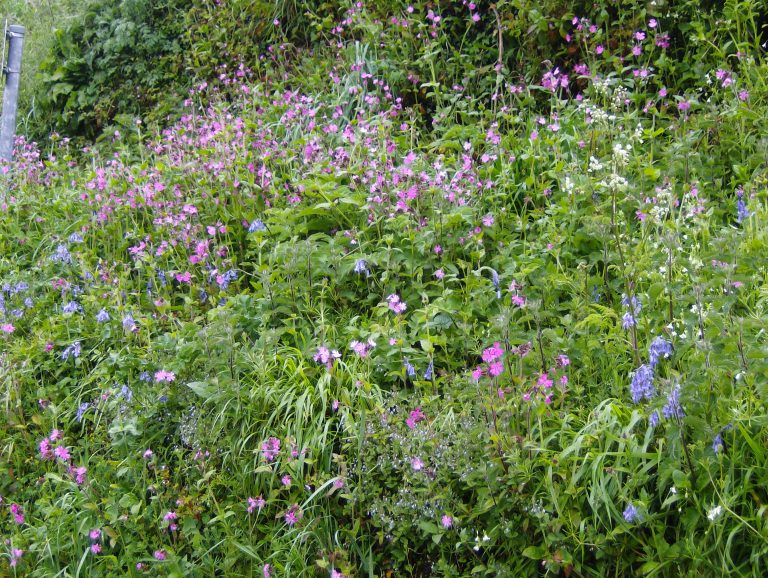
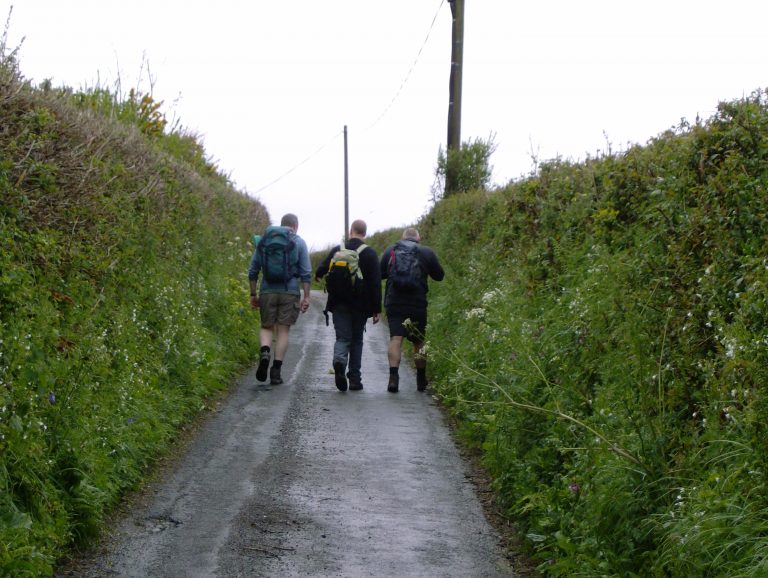
The route to our first overnight stop, at Ivybridge, passed through rolling green Devon countryside and along lanes sweetly fragrant with wildflowers. We walked through villages still deep in weekend slumber and caught occasional glimpses of the dark smudge of Dartmoor along the skyline to the north.

HPIM2931
HPIM2933
HPIM2932
HPIM2934

We crossed Cofflette Creek and then approached Ivybridge along the Erme Valley. In the evening we met Clive’s sister and her family for a pub meal. Although he left Devon more than thirty years ago, Clive still has family all over the county.

This first section of the walk is designated as the Erme-Plym Trail; the Two Moors Way proper starts at Ivybridge. We set off early on the Sunday morning heading north out of town. It’s an unrelenting climb out of the valley and up onto the moor, but very soon we picked up the Two Moors Way waymarkers and moved on to a recognisably moorland landscape. Although it is now deserted, with not even a hamlet or isolated farmhouse, this section of the moor is dotted with former china clay workings and at Redlake the route of a former tramway, used to transport the clay, is still discernible.

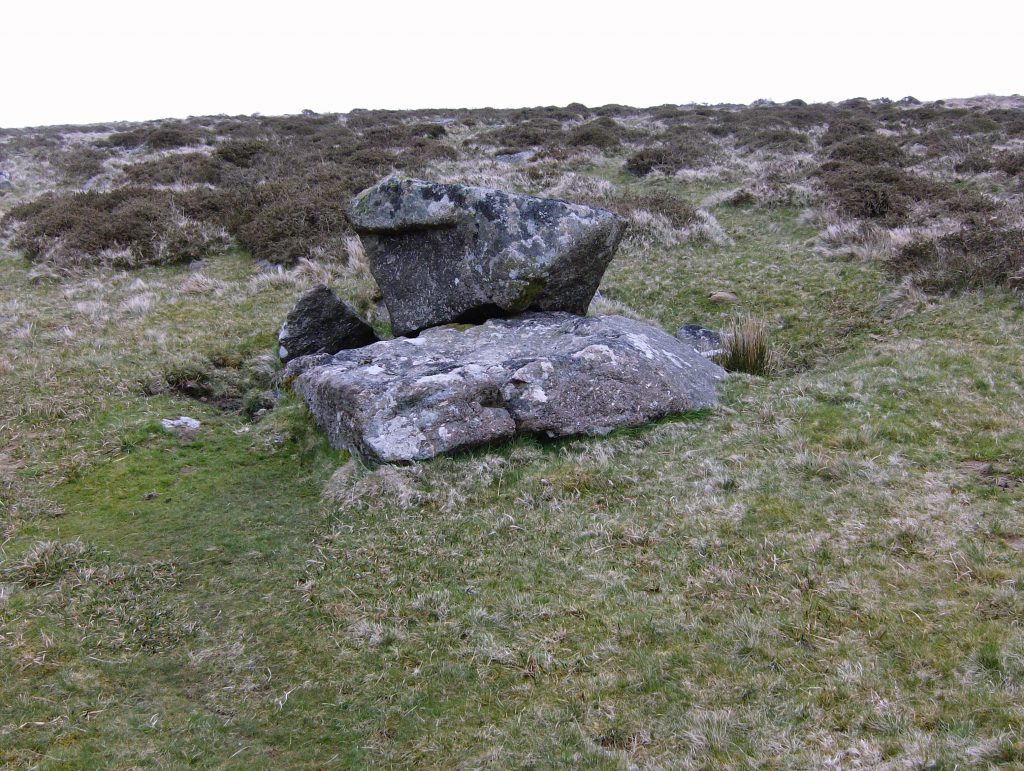
There is lots of evidence of earlier inhabitants of Dartmoor too, with Bronze Age cairns, enclosures and and the remains of burial kists dotted about the landscape.

Just beyond Scorriton we cross the still youthful River Dart and near here our resting place for the night. Alice Oswald’s 2002 poem Dart captures perfectly the otherwordly nature of this landscape:

What I love is one foot in front of another. South-south-west and down the contours. I go slipping between Black Ridge and White Horse Hill into a bowl of the moor where echoes can’t get out

listen

a

lark

spinning

around

one

note

splitting

and

mending

it

and I find you in the reeds, a trickle coming out of a bark, a foal of a river

Alice Oswald – Dart


Map of Two Moors Way courtesy of Cicerone Press
All other pictures ©Bobby Seal

Posted in Home | Tagged , , , | 4 Comments

The Flow of Time: Lockdown, Day 52

Have you also learned that secret from the river; that there is no such thing as time? That the river is everywhere at the same time, at the source and at the mouth, at the waterfall, at the ferry, at the current, in the ocean and in the mountains, everywhere and that the present only exists for it, not the shadow of the past nor the shadow of the future.
Hermann Hesse – Siddhartha

Lockdown Day 52

This is the final post of this series. All things must come to an end. Followers of this blog may recall that, when I started my The Flow of Time project, the idea was to post a picture each week from exactly the same spot on a bend in the river near to the place where I do my voluntary work. I hoped to show the river’s cycle of changes through all the seasons of the year; a total of 52 linked posts. The onset of the lockdown put an end to that particular iteration  and the project became something else. I have enjoyed creating these daily posts, but I think they have now run their course. But I’m so grateful to the many people who have given me such kind and encouraging feedback over the last few weeks.

This blog will continue, but with other and more varied posts. We are still under lockdown in Wales so I plan to use my time at home to edit and complete my novel, Swimming Against the Stream, excerpts from which I have shared on this blog: Julie Baptiste is alive and well and about to move into her second draft!

So this final post is not just about endings, but also concerns new beginnings. On Tuesday my daughter gave birth to her own second daughter and mother and baby are now safely back at home. A new life: our beautiful lockdown child.

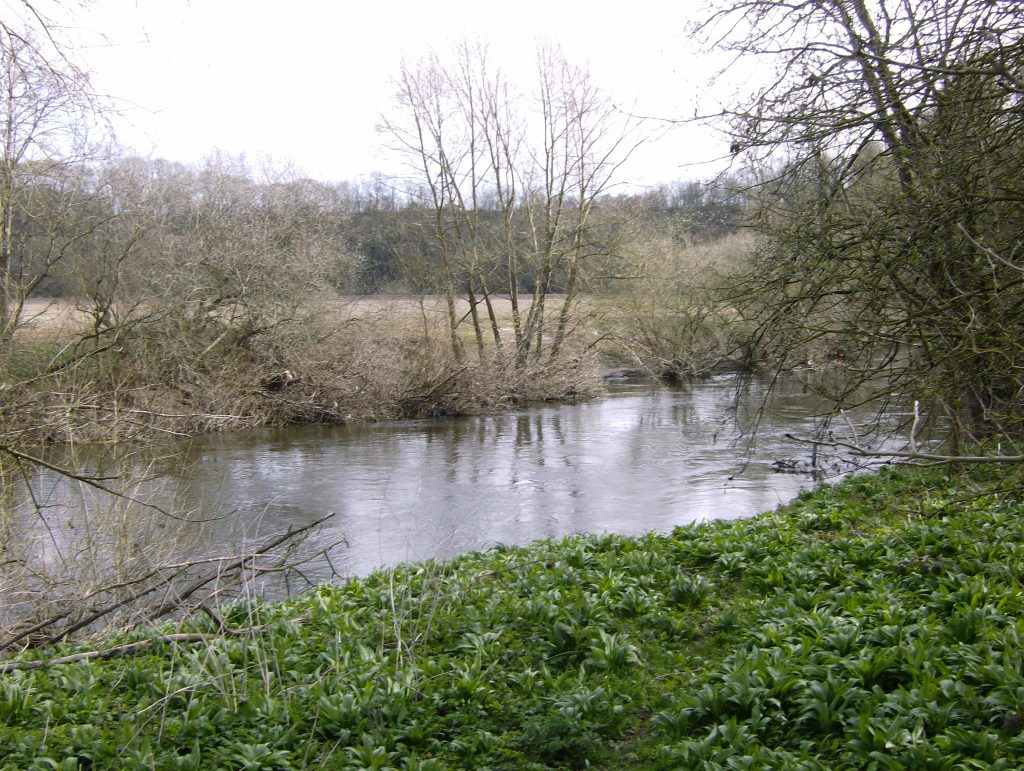
Picture of the River Dee near Overton ©Bobby Seal

Posted in The Flow of Time | Tagged , , , | 11 Comments

The Flow of Time: Lockdown, Day 51

I came from the sunny valleys
And sought for the open sea,
For I thought in its gray expanses
My peace would come to me.

Sara Teasdale – The River

Lockdown Day 51


Dee Estuary in Winter ©Bobby Seal

Posted in Home, The Flow of Time | Tagged , , , , | Leave a comment

The Flow of Time – Lockdown, Day 50

Of four infernal rivers that disgorge.
Into the burning Lake their baleful streams
Abhorred Styx the flood of deadly hate,
Sad Acheron of sorrow, black and deep;
Cocytus, nam’d of lamentation loud
Heard on the rueful stream; fierce Phlegethon
Whose waves of torrent fire inflame with rage.
Far off from these a slow and silent stream,
Lethe the River of Oblivion rolls
Her wat’ry Labyrinth whereof who drinks,
Forthwith his former state and being forgets,
Forgets both joy and grief, pleasure and pain.

John Milton – Paradise Lost

Lockdown Day 50

My post on Day 46, the one about my father’s time as a PoW, is still receiving comments, both on this blog and directly to my inbox. My point about the power of small kindnesses in a time of seemingly overwhelming adversity seems to have resonated with a lot of people. For anyone who enjoyed reading my VE Day blog post, I suggest you also take a look at Simon Lavery’s post on a similar subject HERE. In fact, Simon’s literary blog Tredynas Days is a good one to follow if you appreciate  sensitive, perceptive analysis.

Last week’s blog post was the first time I’d written publicly about my dad’s wartime experiences. It strikes me that, as my awareness of the nearness of my own mortality grows each day, I need to record these experiences in a more comprehensive way before they are lost forever. One of my three daughters has been encouraging me for years to do precisely this. Lisa Hill, commenting about the Day 46 post, suggested there is often someone in each family who is best suited to adopting the role of listener and recorder.

The only other time I shared any of my dad’s story in any kind of public forum was when I used it as the basis for a creative writing essay in my A Level class. In that essay, which I recall I rather pretentiously called Betweeen Time and Timelessness, I drifted back  through time to speak to my father in his PoW camp. I think I was reading a lot of Kurt Vonnegut in those teenage years! Mr Pryce, my rather wonderful English teacher, was full of praise for my essay, though I’m not sure it actually matched the brief we’d been set. He described it as my ‘ghost story in reverse’, an evocative phrase that has stayed with me for all these years, and he encouraged me to work at becoming a writer.

So when I do write that story, it will be for my father, my daughter and for Mr John Pryce.

Picture of River Dee near Aldford ©Bobby Seal

Posted in Home, The Flow of Time | Tagged , , , | 2 Comments

The Flow of Time: Lockdown, Day 49

As for the river, it just kept moving, as river do–as rivers do. Under the logs, the body of the young Canadian moved with the river, which jostled him to and fro–to and fro. If, at this moment in time Twisted River also appeared restless, even impatient, maybe the river itself wanted the boy’s body to move on, too, move on, too.

John IrvingLast Night in Twisted River

Lockdown Day 49


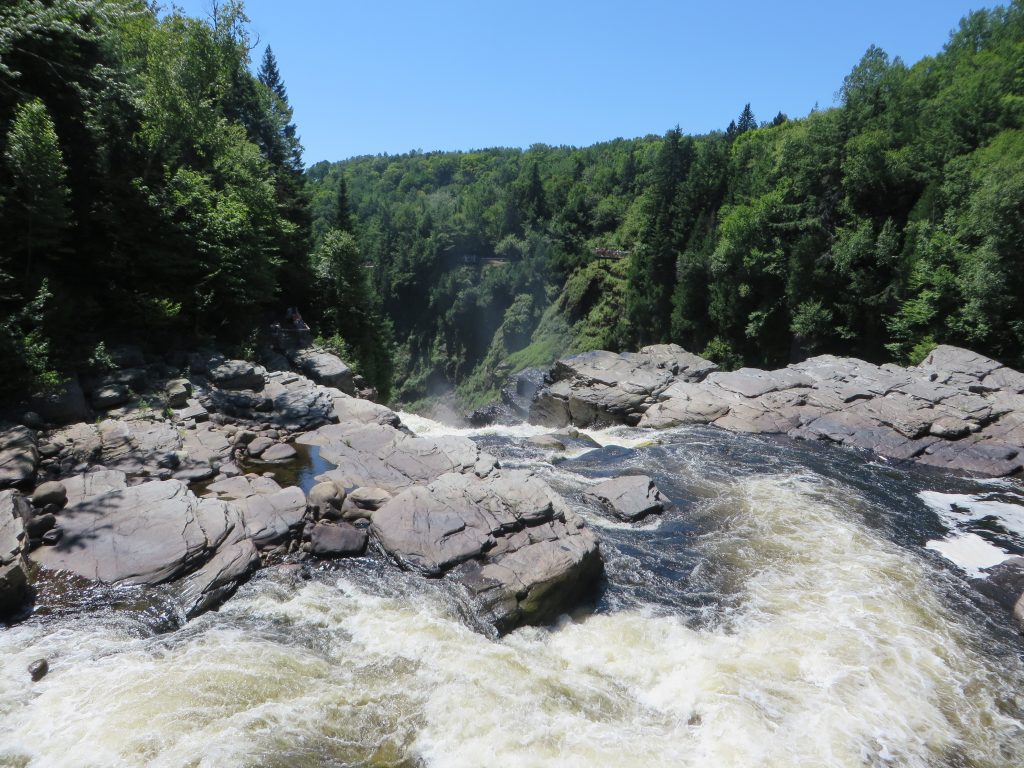
Picture of Canyon Sainte-Anne, Québec ©Bobby Seal

Posted in Home, The Flow of Time | Tagged , , , | Leave a comment