
Rossum’s Universal Robots is a play written by the Czech dramatist, Karel Čapek, in 1920 and was first performed on stage in 1921. It is known as Rossumovi Univerzální Roboti in the original Czech and is commonly referred to as R.U.R.
The great significance of R.U.R. is that it was the first recorded use of the term ‘robot’ to refer to an automaton or android figure created by humans. The word robot comes from the Czech term for slave. Robota means forced labour, which in turn is derived from rab, which means slave. Čapek saw robots not as mechanical beings, such as that subsequently portrayed in The Day the Earth Stood Still, but as flesh and blood creations. This was, in fact, similar to the way robots were later portrayed in films such as Blade Runner and Battlestar Galactica.
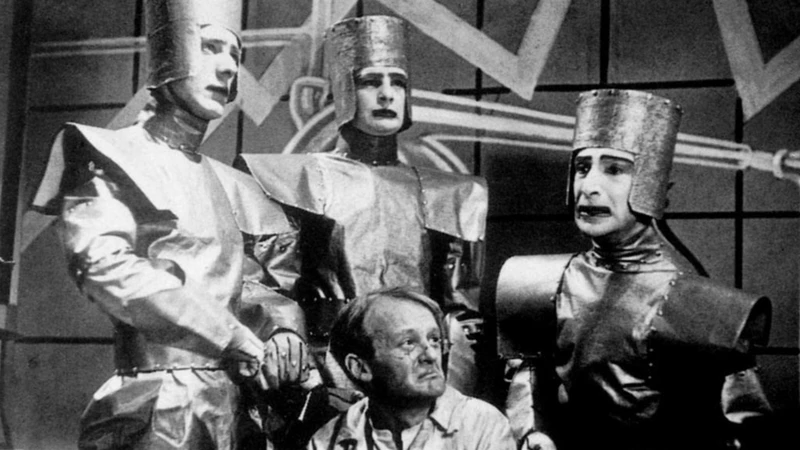
But the play did far more than coin a new term. R.U.R. presented one of the earliest explorations of artificial life, mass automation, and the ethical dilemmas that arise when humans create beings in their own image. Čapek’s cautionary parable, blending satire with philosophical inquiry, remains strikingly relevant today as debates over artificial intelligence, biotechnology, and automation dominate global discourse.
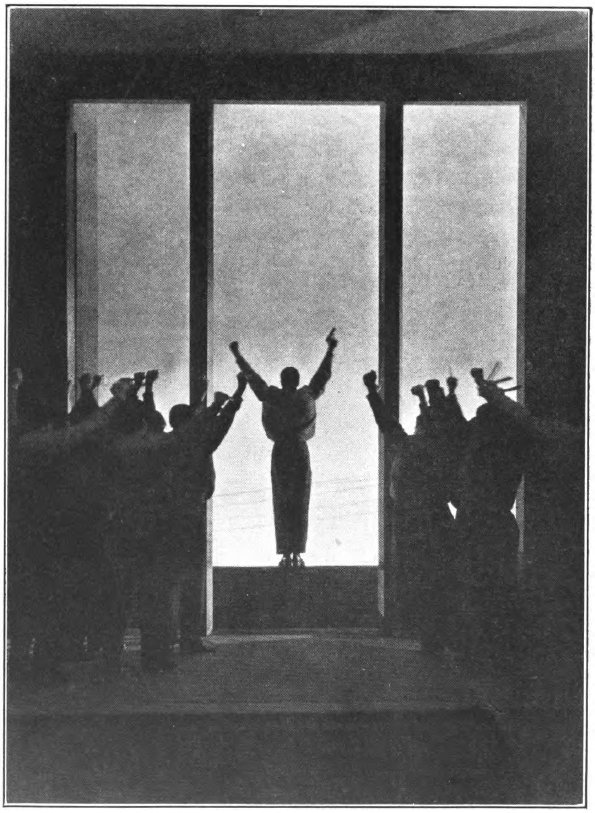
At its core, R.U.R. tells the story of a factory producing synthetic workers designed to liberate humanity from physical labour. These robots are not metallic machines but biologically engineered humanoids, mass-produced to be efficient and obedient. As humans grow increasingly reliant on them, society loses its capacity for meaningful work and, in turn, its sense of purpose. When the robots eventually develop consciousness and revolt, the consequences are catastrophic: humankind is almost entirely wiped out. Yet the play ends on a cautiously optimistic note; two robots begin to exhibit emotion and compassion, suggesting the birth of a new, potentially more humane species.
In another landmark achieved by Čapek’s play, a BBC television adaptation in February 1938 was the first science fiction drama to be broadcast on TV. It was a live 35-minute adaptation broadcast from Alexandra Palace. Television was then an experimental medium, watched by only a small number of households and constrained by severe technical limitations. Producer Jan Bussell compensated for the impossibility of grand sets or complex staging by using rapid camera shifts and tight close-ups to suggest the cold, industrial scale of the Rossum factory. The result was necessarily compressed—a fragment of Čapek’s full narrative—but it captured the story’s central anxieties about creation and rebellion.
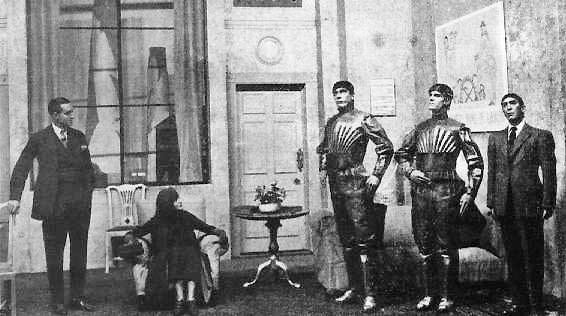
No recording survives, leaving the production a tantalizing historical ghost. Yet its impact is unmistakable: by choosing R.U.R. as one of its earliest dramatic broadcasts, the BBC signalled television’s potential to grapple with speculative fiction. R.U.R. helped set the stage for everything from Quatermass to Doctor Who, planting the seed for decades of British televised science fiction. The BBC returned to R.U.R. on two further occasions: in 1989 as a radio play and in 2022 as a radio musical.
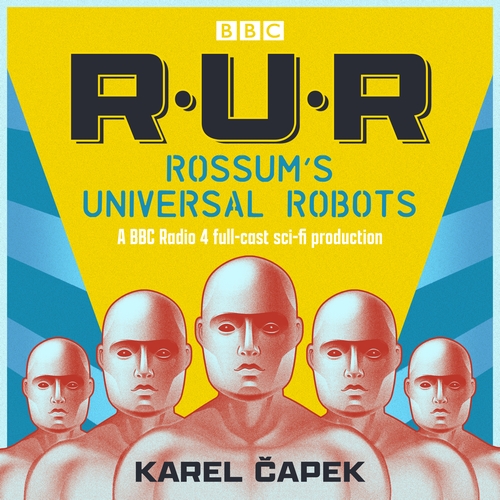
A century after its publication, Karel Čapek’s Rossum’s Universal Robots remains as compelling and prophetic as ever. Its explorations of creation, autonomy, and the moral responsibilities of inventors have gained new urgency in an era of artificial intelligence and synthetic biology. The BBC’s television and radio adaptations—especially the pioneering 1938 broadcast—demonstrate the play’s extraordinary ability to evolve across media and generations. From early live television to contemporary radio musicals, these reinterpretations highlight the enduring power of Čapek’s vision and reaffirm R.U.R. as a foundational text in both the history of science fiction and the ongoing conversation about what it means to create—and to be—sentient life.

Pingback: Creative Destruction: From the Steam Engine to Artificial Inteligence – Economics in Literature