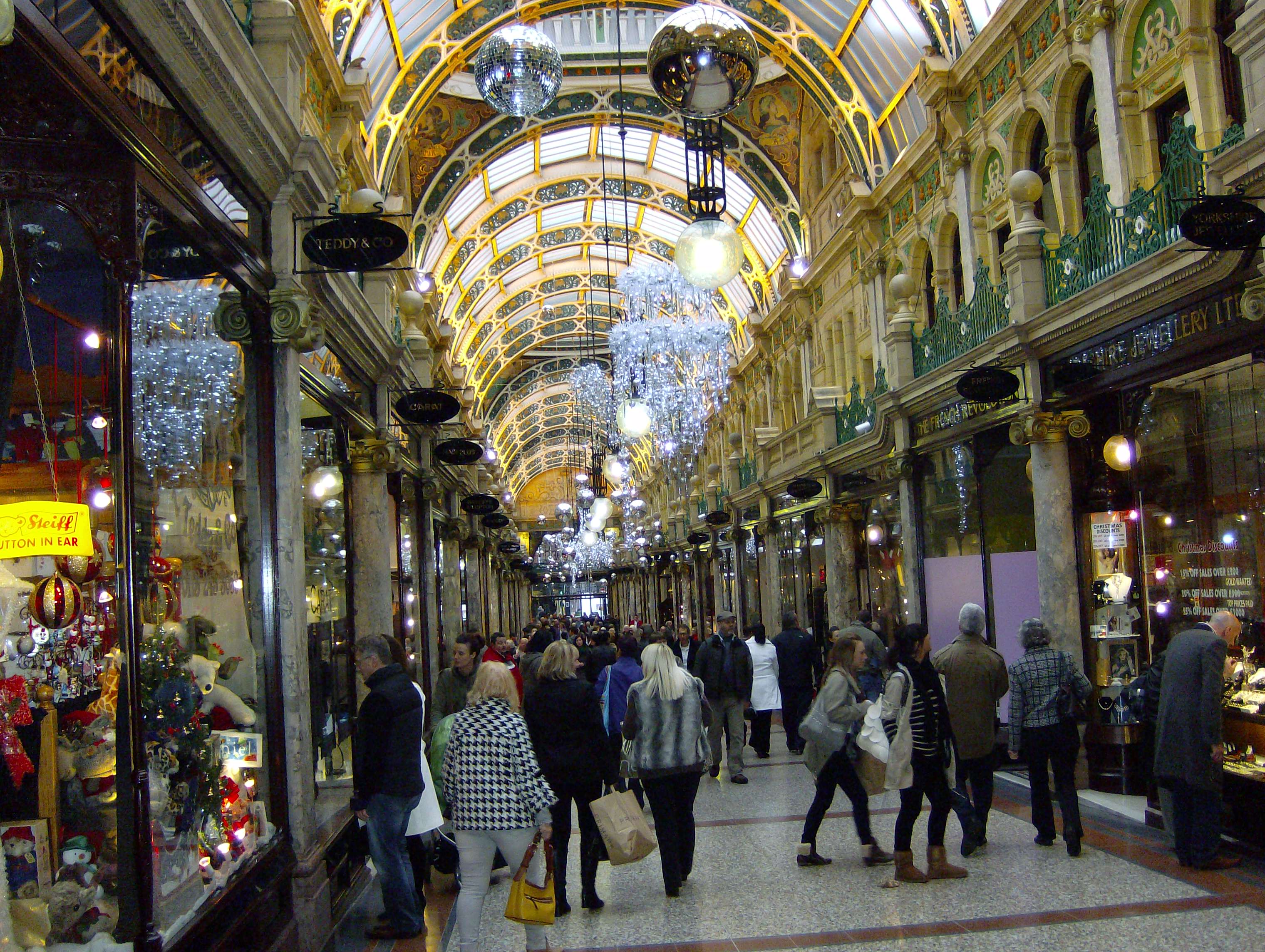
In many ways The Arcades Project is Benjamin’s lament for the passing of the flâneur. For Benjamin, the flâneur’s disappearance functions as a symbol for the ravages of capitalism upon metropolitan life. The changing urban environment was no longer conducive to the slow, ruminative wanderings of the flâneur:
A man who goes for a walk ought not to have to concern himself with any hazards he may run into, or with the regulations of a city. … But he cannot do this today without taking a hundred precautions, without asking the advice of the police department, without mixing with a dazed and breathless herd, for whom the way is marked out in advance by bits of shining metal. If he tries to collect the whimsical thoughts that may have come to mind, very possibly occasioned by sights on the street, he is deafened by car horns, [and] stupefied by loud talkers.
(Walter Benjamin, The Arcades Project (Cambridge, Mass and London, Belknap Harvard, 1999) p. 435)
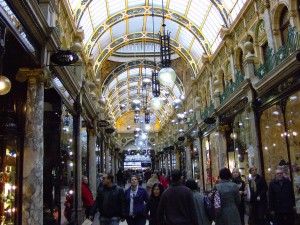
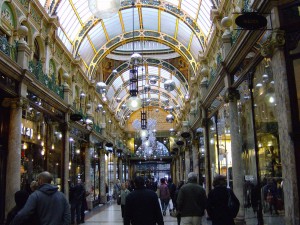
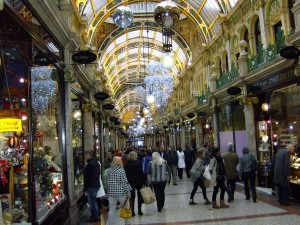
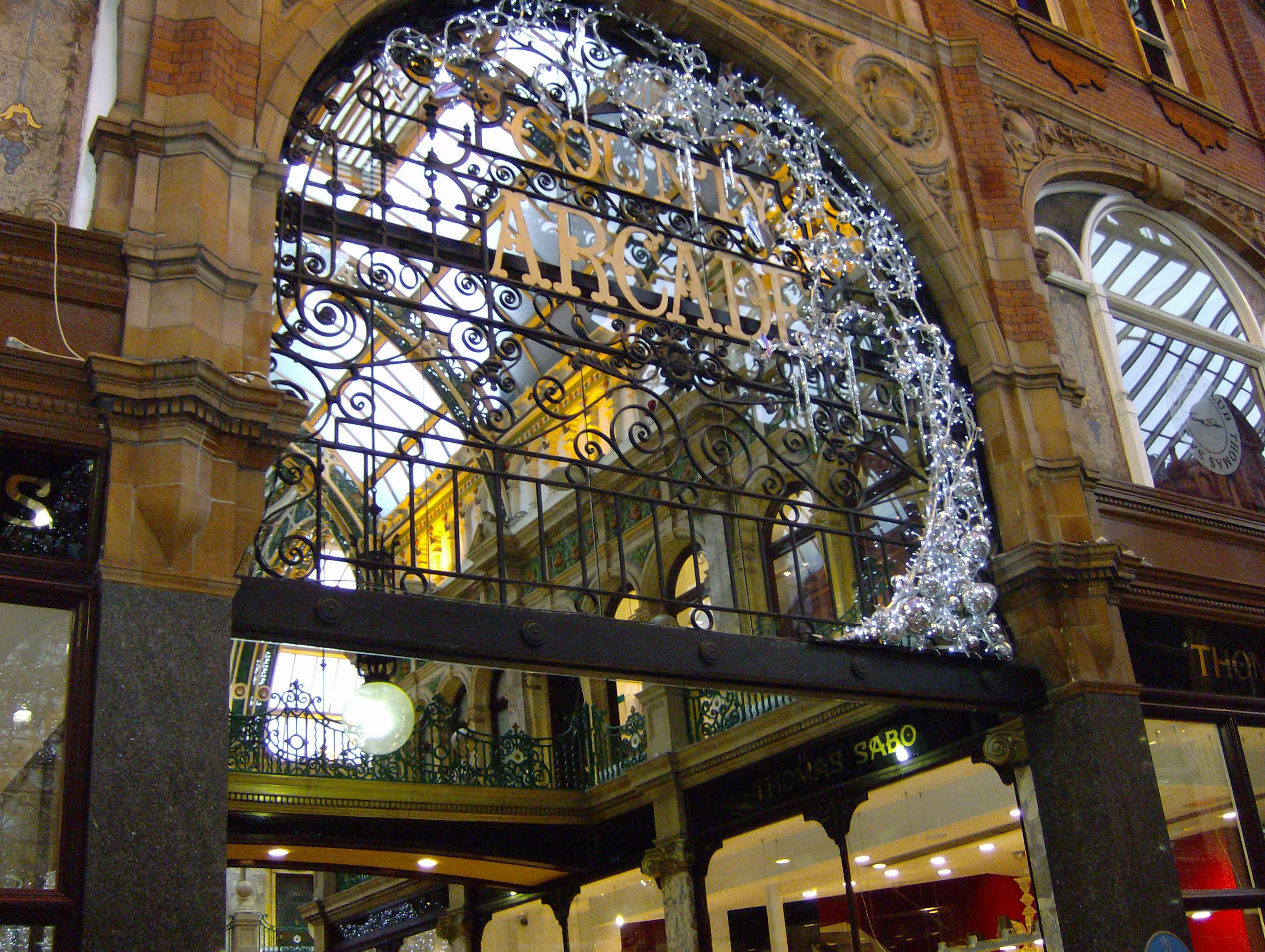
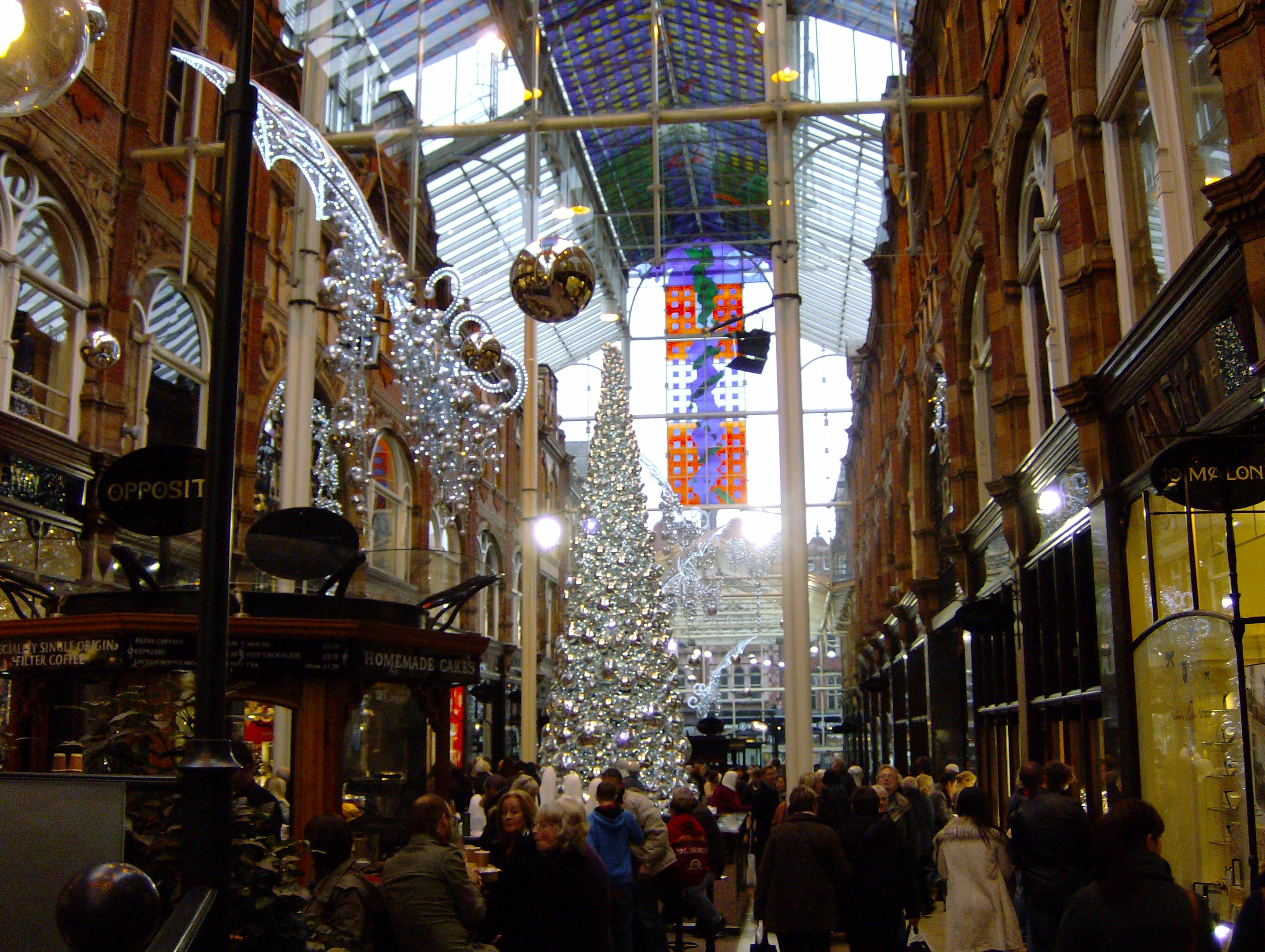
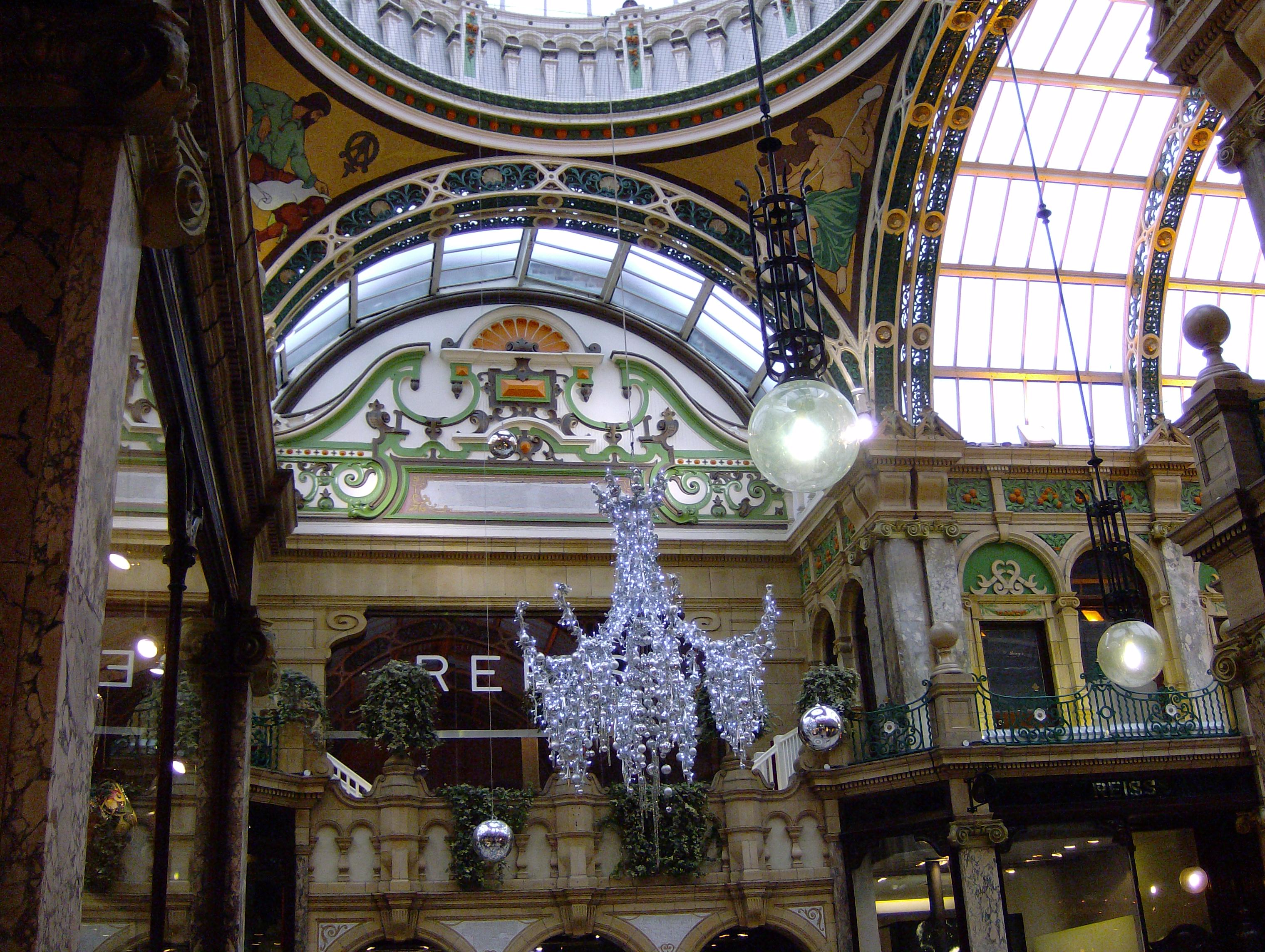
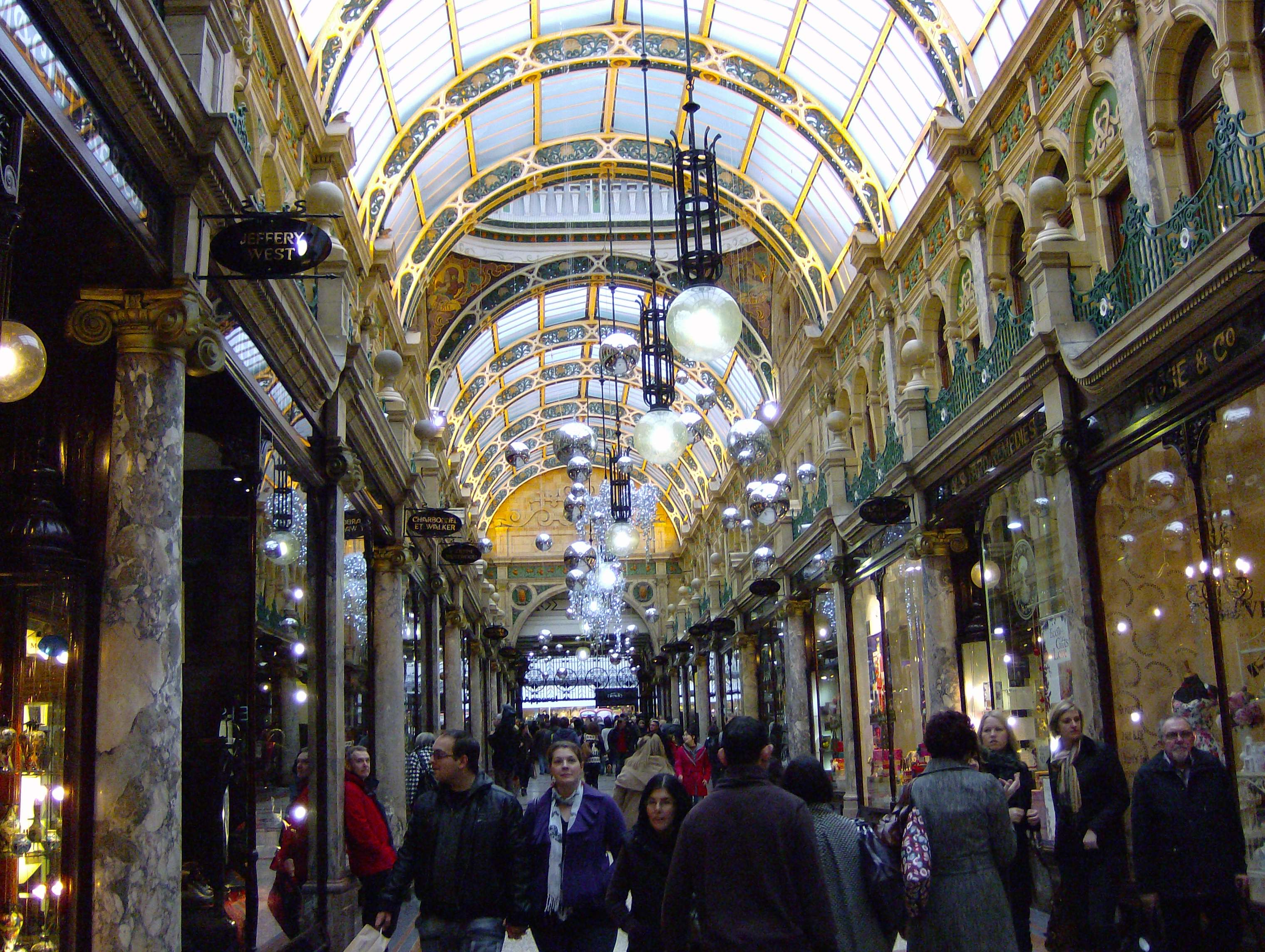
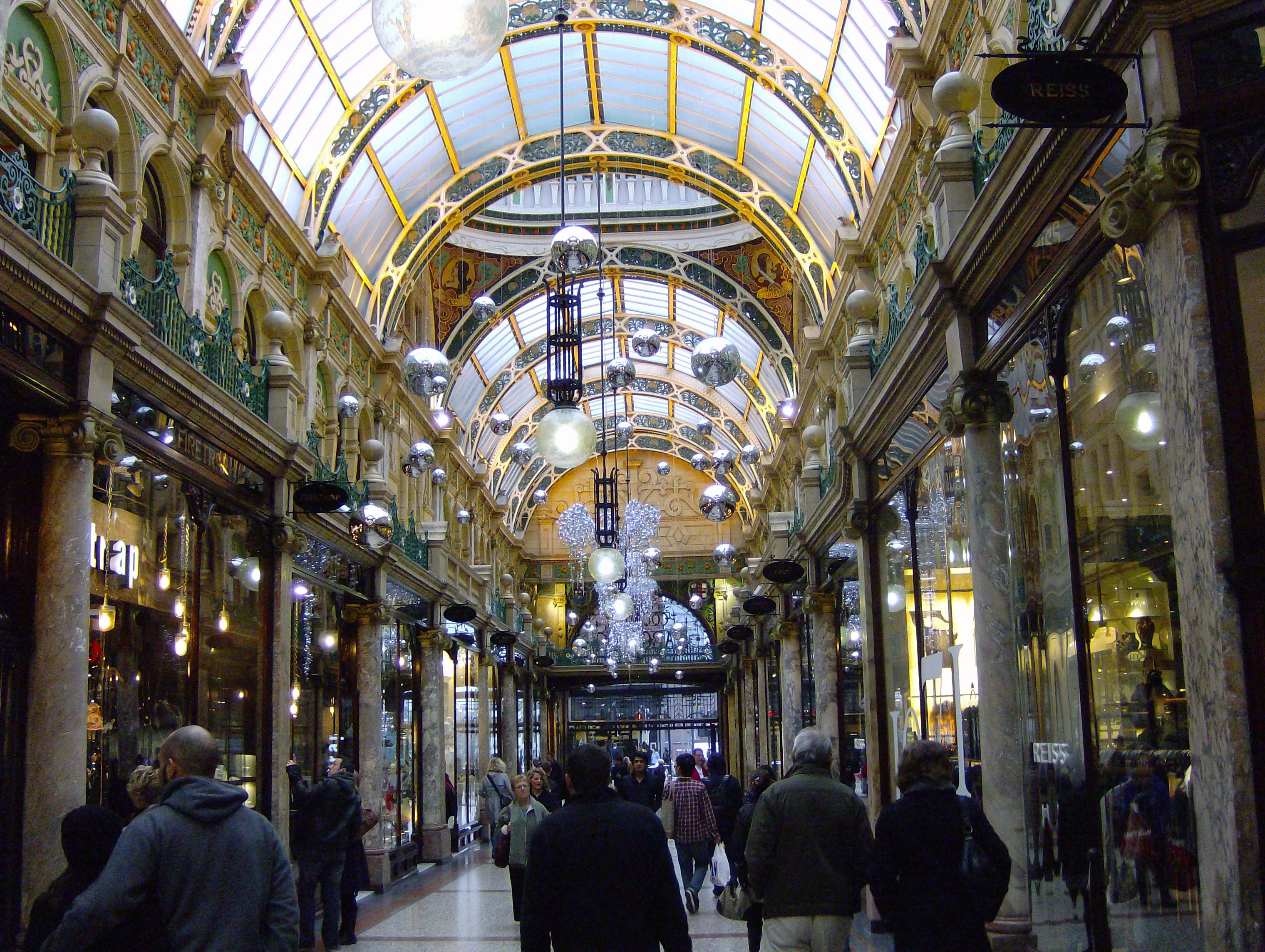
Pictures from a visit to The Arcades, Leeds, England
Thus Benjamin writes of the flâneur as an endangered species; he is marginalised by the social and technological conditions of modernity: the growth of motorised transport; the monopolising of urban public space by consumer culture; the ubiquity of red tape and the standardisation of the nine-to-five day. The Arcades Project is a collection of texts which mirrors the method of the flâneur and his gathering together of the city’s discarded fragments to try to assemble a comprehensible whole. The Arcades Project’s structure invites the reader to wander through its chaotic structure in the way one might explore the streets of a city. To read Benjamin’s key work is in itself analogous to the practice of flânerie.
That the arcades of Paris were long past their heyday was of no concern to Benjamin; in fact it was a key aspect of his world view that all manifestations of successive civilisations were transitory phenomena. As a consequence of this view, Benjamin saw modernity as transient too.
Benjamin suggests, in The Arcades Project, that we can only pore over modernity’s remnants, its ruins, as opposed to being able to study it as something more permanent. Such explorations through the remnants of an already lost modernity, Benjamin argues, have an almost dreamlike quality. Benjamin refers to a concept of remembrance that he calls eingedenken, which provokes inevitable echoes of Proust’s ‘in search of lost time’. For Benjamin, the environment of the city, in particular the arcades of Paris, prompts a recollection of lost memories of times past.
Benjamin rejects the linear path of continuing progress in history, but instead refers to sudden shocks or flashes that capture ‘the time of the now’ or Jetztzeit. These phenomena are at their clearest, argues Benjamin, when they are in decline. Hence his interest in the Parisian arcades at a time when they were at the end of their heyday.