Until relatively recently, women have been noticeable only by their absence from the tradition of Anglo-American high modernism. T.S. Eliot, Ezra Pound, Joseph Conrad, D.H. Lawrence and W.B. Yeats – these are the names which have dominated the English modernist literary canon, with Virginia Woolf representing a token female presence.
Sally Ledger, The New Woman: Fiction and Feminism at the Fin de Siècle (Manchester & New York, Manchester University Press, 1997)

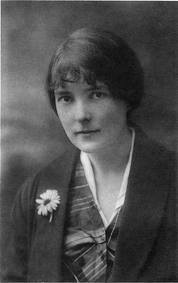
Katherine Mansfield was, until recently, regarded as very much a minor figure in the development of modernism. But the growth of feminist literary criticism in the 1970s, particularly the work of Hélène Cixous and others in France, has led to a reappraisal of Mansfield’s work, and in particular her short stories.
What Mansfield had in common with other modernist writers, including those who were male, is a questioning of the nature of truth and reality; a challenging of the certainties and assumptions that had underpinned Victorian fiction. The very notion of objective truth was viewed as suspect by Mansfield. As David Daiches puts it:
Truth viewed in terms of the conventions and assumptions of a stable civilization ceased to be regarded as truth when it became obvious that that civilization was losing its stability, when its criteria of value were ceasing to be universal, and when its conventions were coming to be viewed as irrelevant.
David Daiches, Katherine Mansfield and the Search for Truth in Rhoda B Nathan (ed), Critical Essays on Katherine Mansfield (New York, Maxwell MacMillan International, 1993)
Through the Lens of Gender
But Mansfield brought something else to the modernist table; not just a questioning of the nature of truth and reality, but an appreciation of the crucial role of gender. One of the key assumptions that Mansfield, and other female modernists, challenged was the habit of presenting narrative fiction through male eyes and according to male values. This had implications not just for her outlook, but for her narrative style too.
Katherine Mansfield’s writings suggest a sense of personal truth; a subjective truth based on female experience in a society where women were still marginalised. In terms of form, Mansfield explored these ideas through the short story. This was partly because her writing career was cut tragically short by her early death, but also because this form gave her a structure within which to polish her characters and experiment in form. Indeed, some critics go so far as to suggest the short story format is particularly suited to writers exploring a feminist world view.
Many of Mansfield’s short stories focus on those estranged or isolated by society, in particular women. Bliss is about a young woman struggling to understand her own newly discovered sexuality, Miss Brill concerns an impoverished, lonely spinster and Pictures a struggling singer who is forced to turn to prostitution. Mansfield wrote at a time when women, and some men, were questioning traditional gender roles. The movement for women’s suffrage was demanding political equality, the spread of psychoanalytical theories increasingly gave a conceptual framework to female sexuality and writers such as Mansfield, Woolf and Richardson were asserting that they had a voice which needed to be heard.
As a writer, Katherine Mansfield was particularly interested in exploring female identity and sexuality. Many of her female characters – Bertha Young in Bliss, Ada Moss in Pictures and Miss Brill in the short story of that name – are represented as experiencing a crisis of identity. Indeed, in many cases Mansfield’s female characters can be said to have a fragmented identity, suggesting they are experiencing a struggle to integrate their internal and external selves within the strictures of a male-dominated society. In common with other modernist writers, Mansfield focussed on her characters’ internal life rather than the external world.
Although she generally wrote using a third-person narrative, she is able to shift in and out of the minds of her characters and consistently succeeds in revealing their psychological state. Mansfield used symbolism to give the reader insights into the psychological state of her characters; she used evocative images rather than analytical description. Her short stories are full of these symbols: the pear tree and the cat in Bliss, the fox-fur wrap in Miss Brill and the glove in A Dill Pickle.
Mansfield’s most successful short stories, such as Bliss, have a palpable sense of intensity and power. Her stories are a triumph of style, challenging nineteenth century realism and overcoming the conventional constraints of plot, sequential development and conclusion. Although she was perhaps not central to the modernist movement, Mansfield shared the determination of others, such as Woolf and Joyce, to develop new ways of seeing and describing. In a way similar to contemporaneous changes in the visual arts, Mansfield’s short stories concentrate on communicating moods, impressions and transient emotions.
The key to many of Mansfield’s short stories is the moment of epiphany; the point at which the character achieves a degree of self-realisation. But this realisation rarely leads to happiness. In A Dill Pickle, for instance, Vera is devastated when she suddenly realises that her former lover, although he is clearly vain and self-opinionated, understands her far better than she understands herself. Or in Bliss, in a moment of aching poignancy, Bertha’s sexual awakening is quickly followed by her discovery of her husband’s infidelity with Miss Fulton. Her pain is expressed by Mansfield’s use of unplayed music as a symbol. Bertha is an instrument eager to be played for the first time:
Why be given a body if you have to keep it shut up in a case like a rare, rare fiddle?
Mansfield’s characters live in a world where options for women are limited. Women, in particular the middle-class women that Mansfield was most familiar with, could be daughters or wives; or perhaps left in the socially inferior state of spinsterhood. In between a woman being dependent on her parents and, later, on her husband was a carefully regulated process of courtship. Independence and a career was rarely an option. Married women, unless exceptionally poor, did not go out to work. Schoolteachers had to give up their career upon marriage. Society accepted the working spinster, but not the working wife.
In Bliss, Mansfield presents a society where married women exist in a subordinate position to their husband and where male hypocrisy is the norm. The adulterous husband, Harry, is confident in his dominant position in the marital household. He turns back to his wife, Bertha, after having escorted his lover to the door at the end of a dinner party, still ‘extravagantly cool and collected’.
Rosemary Fell is the rich, bored married woman in A Cup of Tea. Unlike Bertha Young, we learn nothing in the story of her sexuality or the extent of her husband’s fidelity. In some ways, she stands outside the bonds restricting less privileged women of her time. She is:
young, brilliant, extremely modern, exquisitely well dressed, amazingly well read in the newest of the new books, and her parties were the most delicious mixture of the really important people and… artists – quaint creatures, discoveries of hers
However, we learn that Rosemary has anxieties of her own. She worries about how she looks – about whether she fits the male definition of an attractive woman. She at first enjoys the adventure of picking up a young woman, Miss Smith, in Curzon Street when she asks her for money to buy a cup of tea. She takes her home, feeds her and promises to take care of her: ‘I’ll look after you.’ However, once Rosemary realises that her husband, Philip, has noticed that Miss Smith is attractive, Rosemary quickly dismisses her. In spite of all her material advantages, Rosemary seems to fear that her husband’s interest in her is only fleeting and dependent on her looks. At the conclusion of the story, once Miss Smith has gone, she asks her husband the question on her mind:
‘Philip,’ she whispered, and she pressed his head against her bosom, ‘am I pretty?
Bliss is Mansfield’s best known exposition of female sexuality. The story opens with Bertha Young’s sudden and growing awareness of her own sensuality as she walks home along the street. At first there is a suggestion that this is a spiritual state, but it is quickly revealed as repressed sexual desire. Upon arriving home, she tries to find an outlet for these new feelings by arranging the fruit that has been delivered for that evening’s dinner party. Mansfield describes this process lovingly and sensually:
There were tangerines and apples stained with strawberry pink. Some yellow pears, smooth as silk, some white grapes covered with a silver bloom and a big cluster of purple ones.
Bertha stands back to admire her work:
she stood away from the table to get the effect – and it really was most curious. For the dark table seemed to melt into the dusky light and the glass dish and the blue bowl to float in the air. This, of course in her present mood, was so incredibly beautiful. . . She began to laugh.
Still struggling to understand these new feelings, Bertha goes to the nursery, feeling the need to show her affection for her child. But soon, the nurse hustles her away and Bertha continues to prepare for the dinner party. At the party, Bertha feels drawn to Pearl Fulton, her pretty and stylish new friend. She shows Pearl the pear tree in the garden. Standing at the window of the drawing room together, she experiences a sense of silent, intimate communion with Pearl:
How long did they stand there? Both, as it were, caught in that circle of unearthly light, understanding each other perfectly, creatures of another world, and wondering what they were to do in this one with all this blissful treasure that burned in their bosoms and dropped, in silver flowers, from their hair and hands?
But Bertha represses any physical feelings she may have for Pearl and realises, for perhaps the first time, that she desires her husband. But Bertha’s ‘bliss’ is soon thwarted. Having embraced the idea of both a more intimate friendship with Pearl Fulton and stronger physical relationship with her husband, Bertha’s hopes in both directions are dashed when she realises that Pearl and Harry are having an affair with each other and that she is excluded from intimacy with both. Some critics, such as Merja Makinen, have questioned Mansfield’s portrayal of female sexuality in Bliss. Having recognised her own sexuality, even to the extent of threatening to overcome the norm of the passive female, Bertha is pushed back into a corner where married women have very little say in how they express their sexuality.
But unmarried women fare no better in Mansfield’s short stories. In Miss Brill, for instance, she creates a bleak portrait of an impoverished, lonely spinster. Miss Brill’s habitual Sunday rituals help maintain her sense of identity:
They were all on the stage. They weren’t only the audience, not only looking on; they were acting. Even she had a part and came every Sunday. No doubt somebody would have noticed if she hadn’t been there; she was part of the performance after all. How strange she’d never thought of it like that before!
She convinces herself that she is part of a community of people who visit the park every weekend; but her illusion is shattered by the hostility of a young couple who mock her:
Why does she come here at all – who wants her? Why doesn’t she keep her silly old mug at home?
Miss Brill’s precarious sense of identity and sexuality is embodied in the mangy fox fur wrap she wears:
Dear little thing! It was nice to feel it again. She had taken it out of its box that afternoon, shaken out the moth-powder, given it a good brush, and rubbed the life back into the dim little eyes.
When Miss Brill returns home from the park, chastened by her confrontation with the young couple, all her lonely sadness seems to be embodied into the fox wrap:
She unclasped the necklet quickly; quickly, without looking, laid it inside. But when she put the lid on she thought she heard something crying.
In Pictures, Mansfield represents a female central character not even able to hide behind a mask of genteel poverty of the kind projected by Miss Brill. Ada Moss is a singer, out of work and penniless, she lives in a dingy top-floor bedsit for which she struggles to pay the rent. Even her looks, which once brought her regular work on the stage, are fading:
She flung off the bedclothes, and sitting on the side of the bed, furious and shivering, she stared at her fat white legs with the great knots of greeny-blue veins.
Without the respectability and relative material security provided by being attached to a man, she must sell herself at an endless and dispiriting round of agents and auditions. The story presents a snapshot of one such day, when the rent is overdue and she cannot find work. Tired and in despair, she meets a man in a café and goes off with him, seemingly to sell the only thing she has of her own for the money to pay her rent:
Five minutes later the stout gentleman heaved himself up. ‘Well, am I goin’ your way, or are you comin’ mine?’ he asked. ‘I’ll come with you, if it’s all the same,’ said Miss Moss. And she sailed after the little yacht out of the café.
Mansfield’s short stories present a bleak picture of life for women in early twentieth-century England. For married women, even those from the middle classes, life frequently brings alienation, powerlessness and sexual frustration. For single women, their social position makes them even more vulnerable to exploitation by men and often brings loneliness and poverty.
Power and Alienation
As a modernist writer, Katherine Mansfield developed new ways of seeing, interpreting and recording the world around her. Her short stories demonstrate a determination to move away from narrative forms dominated by the all-wise, authoritarian, almost exclusively male, writers of previous generations and to write in a way that represents, in a direct manner, the feelings and responses of her characters. Mansfield was not a political writer, but her stories are rooted in the social, cultural and political upheavals of her time.
Concepts of alienation were by no means new at the time Mansfield was writing – Karl Marx developed the concept into a radical and secularized critique of society. He focussed, in particular, on the alienation of the working class under capitalism. Sigmund Freud took notions of estrangement into the personal realm, focussing in particular on human sexuality. He highlighted the problem of the split between the conscious and unconscious personality. Repressed or unacknowledged desires, Freud argued, were the chief cause of psychological illness. Repressed sexuality is a frequent theme in Mansfield’s short stories; most notably in Bliss.
Bliss makes no direct reference to the suffrage campaign nor to contemporary demands for women’s equality. However, it clearly represents Mansfield’s expression of the subordination of women; a subordination that gave rise to these movements.
Beneath the superficial contentment and material comfort of Bertha’s life, Mansfield portrays a smouldering sense of alienation. She shows the reader a society where women are estranged from their own bodies and from any expression of their sexuality. Bertha struggles to come to terms with her new-found sense of her own sexuality, the ‘bliss’ of the title. We get to know nothing of the origin of this new feeling in Bertha. Her reactions to it are complex – she both embraces it and fears it:
It was almost unbearable. She hardly dared to breathe for fear of fanning it higher, and yet she breathed deeply, deeply.
She is alienated from her body and Mansfield describes her attempts to find external channels to express her new desires – fruit, her child, a pear tree in the garden – before Bertha comes to the conclusion that it is her husband, Harry, that she desires:
At those last words something strange and almost terrifying darted into Bertha’s mind. And this something blind and smiling whispered to her: ‘Soon these people will go. The house will be quiet – quiet. The lights will be out. And you and he will be alone together in the dark room – the warm bed . . .
But this is a false epiphany: the evening ends with the shattering of Bertha’s dream when she overhears Harry arranging a meeting with Miss Fulton. All she is left with is the pear tree in the garden and seemingly no legitimate outlet for her bliss. Harry, on the other hand, holds the power within their marriage and is able to maintain respectability, an ordered home and children with Bertha whilst at the same time enjoying sexual fulfilment outside that marriage with Pearl Fulton.
But Pearl’s position is perhaps even more precarious than Bertha’s. She relies on her youth and looks – qualities which are by their very nature ephemeral – to attract powerful men such as Harry. Both women are united in a common need to rely on men to give them their sense of self; to feel a sense of purpose.
At the time that Mansfield was writing, Freud was developing his psychoanalytical theories in Vienna. Analysing the social and sexual relationships of the time, he asserted that neurotic symptoms were the product of an unresolved conflict between unconscious impulses and conscious ones. The repression of one’s sexual feelings, which society of that time demanded of all, but especially of women, lay at the root of what Freud called ‘hysteria’ or what, currently, we would call mental health problems.
Bliss is arguably Mansfield’s most accomplished work. She presents a surface story of a day in Bertha Young’s life. However, beneath this she incorporates more sombre tones which, through suggestion rather than exposition, question the nature of Bertha’s new found feelings. As the story unfolds, Mansfield confirms her credentials as a modernist writer by her skilful combining of incident, image, symbol, and structure. These subtly point to the socially-determined obstacles which hamper Bertha’s expression of her ‘bliss’.
A Dill Pickle also explores this area of the power relationships between men and women. Vera and the unnamed male protagonist of the story were once lovers. After a six year hiatus they meet again in a café; whether by chance or arrangement we are not told. A Dill Pickle is typical of many of Katherine Mansfield’s short stories in that it seems to start in the middle; the reader is not told what happened before the story starts, nor what comes after. Although the story is told from Vera’s viewpoint, we learn very little about her. The man, on the other hand, although un-named, provides a great deal of detail about himself.
Vera and her former lover reminisce about the time they spent together. He has clearly prospered since the end of their relationship:
Now he had the air of a man who has found his place in life, and fills it with a confidence and assurance which was, to say the least, impressive. He must have made money, too. His clothes were admirable, and at that moment he pulled a Russian cigarette case out of his pocket.
Vera, on the other hand has gone down in the world since they parted; her beloved piano has gone: ‘sold, ages ago’, and she no longer has time for music. As a woman alone in a male society, a woman with a past, she struggles to make a living. With only thinly disguised glee, he highlights the power imbalance that prosperity has created between them. She fascinates him still, but he is no longer in her thrall. He makes a point of reminding her of the letter she wrote to him at the end of their relationship:
I’ve often thought how I must have bored you. And now I understand so perfectly why you wrote to me as you did – although at the time that letter nearly finished my life. I found it again the other day, and I couldn’t help laughing as I read it. It was so clever – such a true picture of me.
With carefully chosen anecdotes, he parades a world of travel and the fine things of life before Vera. He confesses he was ‘such a kid’ before, but now he seeks to impress her with the wisdom and sophistication he has gained. Vera is tempted, but the balance of power between them has clearly shifted. She leaves swiftly and without a word, as if trying to snatch at some last remnant of her dignity. Although the man’s crushing sense of his own self-importance is made clear, Mansfield also suggests a hint of egotism on Vera’s part too.
The latter decades of the nineteenth-century saw major changes in the rights of women to keep their own earnings and inherited wealth through the Married Women’s Property Acts of 1870 and 1882. Further advances were made in the early twentieth century through changes to custody and guardianship law and the introduction of universal suffrage. However, Katherine Mansfield was able to demonstrate, through her short stories, that women throughout this period were kept in an almost universally subordinate position to men. Mansfield’s achievement was made, not through polemic, but through the creation of stories containing characters of great psychological depth; characters with a tangible inner life.
Mansfield’s Women
Some critics have regarded Mansfield as a failed novelist who plied her writing trade in the somewhat lightweight arena of the short-story. Virginia Woolf once suggested that Mansfield was lacking ‘the ability to plot larger structures’. I would contend, however, that Mansfield was, in fact, an innovative and profound writer who happened to work mainly in the short-story form. She was unashamedly a woman writing short stories about women. Indeed, it can be argued that Mansfield did not need to write a novel; she was fully occupied by continually experimenting and trying to write the perfect short story.
Perhaps Mansfield’s greatest achievement was, in style and content, to question the nature of truth and reality and to present a new truth and a new reality, written from a female perspective. There were a number of factors which encouraged Mansfield’s experimentation with new ways of writing: the rise of the psychoanalytic movement, the shock waves created by the Great War and the general questioning and challenging by artistic movements in all spheres of expression.