
I attended the Montréal World Film Festival while travelling in Québec in 2016. I remember it was a slightly chaotic affair and it came as no surprise that the festival, founded in 1977, finally folded in 2019. I can recall very little about the films that I saw, but one of the most memorable sights when wandering through Montréal, particularly the Old Port area, was the number and variety of ghost signs still visible on many of the city’s older buildings.
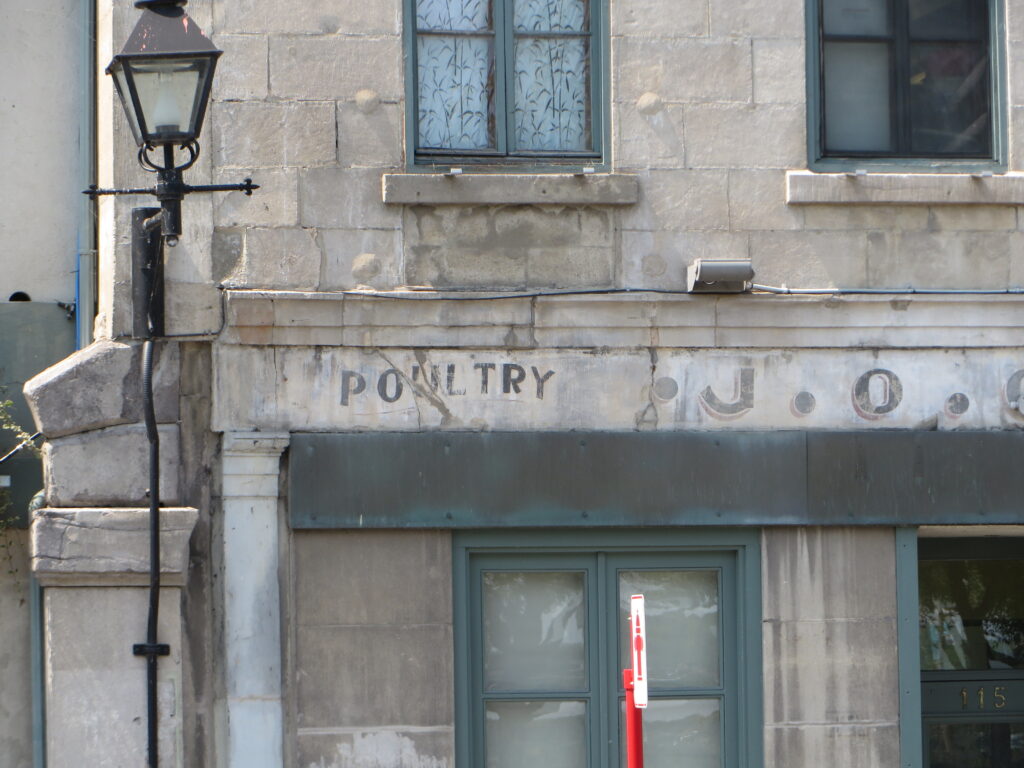
Before the rise of neon and plastic signage in the mid-20th century, painted wall signs were the primary way businesses announced themselves. Montréal, with its densely packed commercial district and its buildings of stone and brick, was an ideal canvas. From tobacco and liquor companies to local tailors and poultry shops, businesses paid professional sign painters to transform brick façades into marketing messages visible from tramlines, pavements, and street corners.
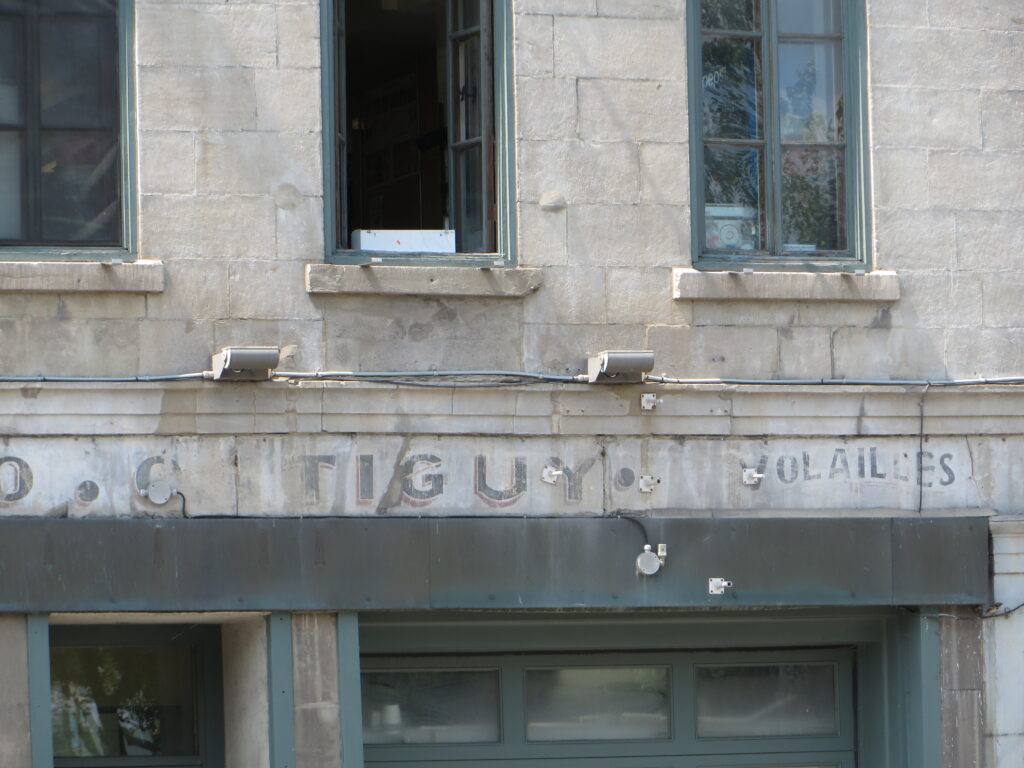
These signs were never meant to last more than a few years. Yet many of Montréal’s signs have been preserved as layers of paint bound into the porous stone and brick. They remain as ghost signs, urban fossils faint but legible to the attentive eye.
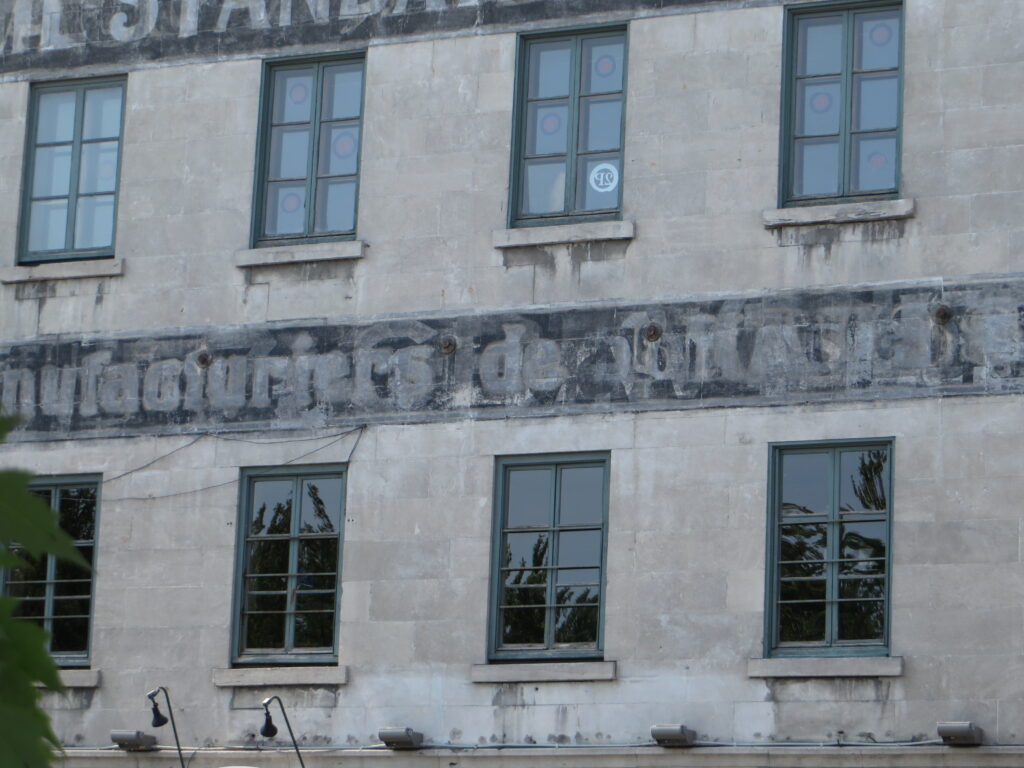
A striking feature of Montréal’s ghost signs is their palimpsestic quality: many walls reveal not just one sign but several, layered over decades. A hardware ad might half-cover a liquor ad, which itself sits atop the faded outline of an earlier shopkeeper’s name. These visual layers echo the city’s own cultural layering — French and English commerce side by side, immigrant entrepreneurs setting up shop in buildings that once housed other trades.
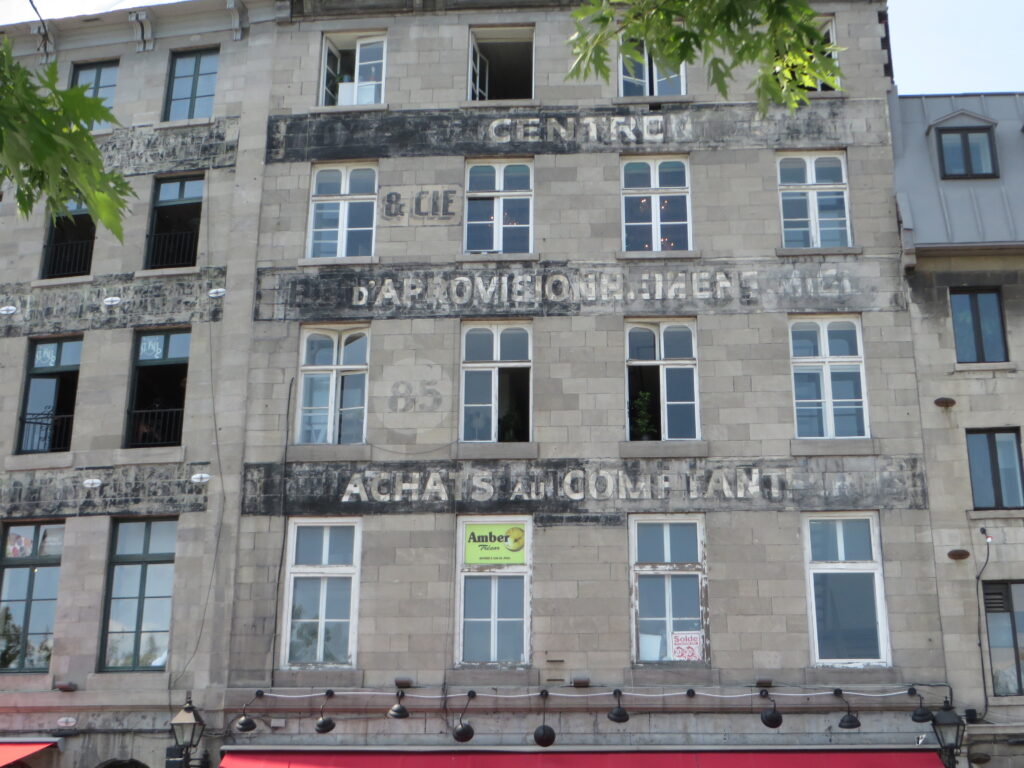
Unlike official heritage sites, ghost signs often survive by accident. They linger until redevelopment covers them or weather erases them. In recent years, local photographers and historians have begun systematically to document them. Initiatives such as the Montréal Signs Project at Concordia University and the photographer John Toohey have created archives of commercial and cultural signage, recognizing ghost signs as part of the city’s visual heritage.
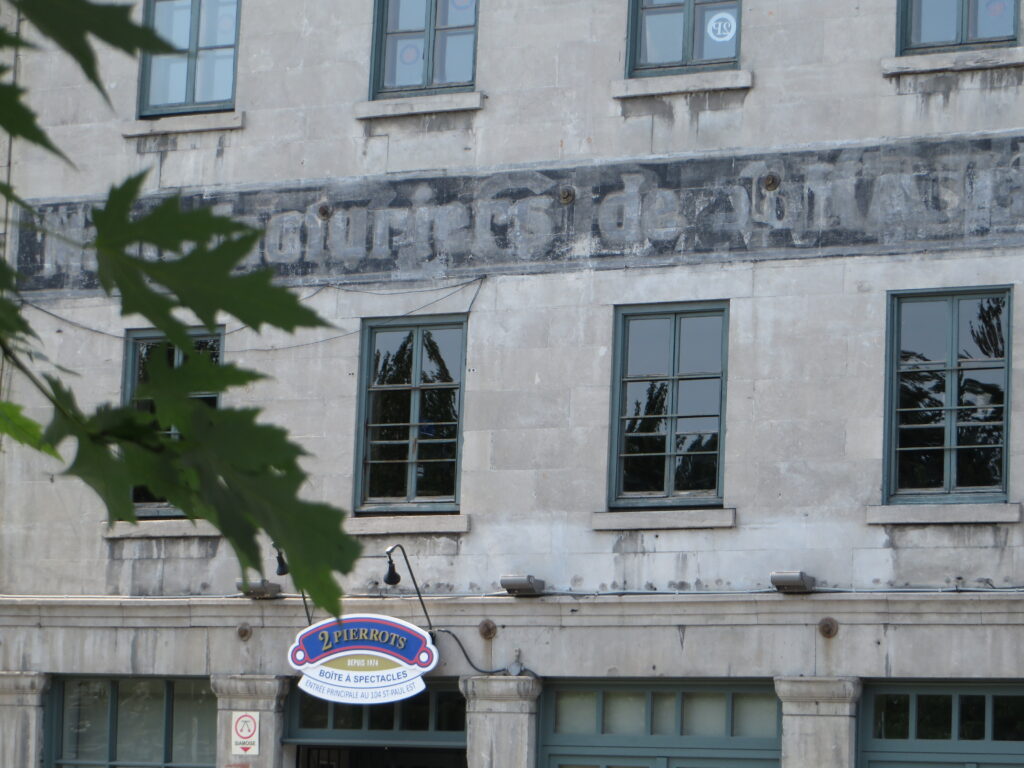
Some now advocate for the conservation of ghost signs, not by restoring them to bright colours but by allowing them to remain as they are: faded, spectral, half-erased. Their very ghostliness is, perhaps, what gives them meaning.
All images by Bobby Seal

Wonderful, Bobby. I’ve occasionally seen ghost signs in some Scottish cities and it’s intriguing when that happens.
Thanks Sandy. There are some far better pictures of Montréal’s ghost signs doing the rounds than the ones I took. Try the two links I suggested and I’m sure there are many others.
Wonderful! I do love a ghost sign. We have one locally that has featured in my photo a day project a few times as it continues to fade.
Thanks Liz. Yes, I find my eye is constantly drawn to any ghost sign I pass. Regarding Montréal, I think my piece was perhaps a bit harsh on the film festival. One very effective thing they did was to project silent films onto the sides of downtown buildings at night. Absolutely stunning!